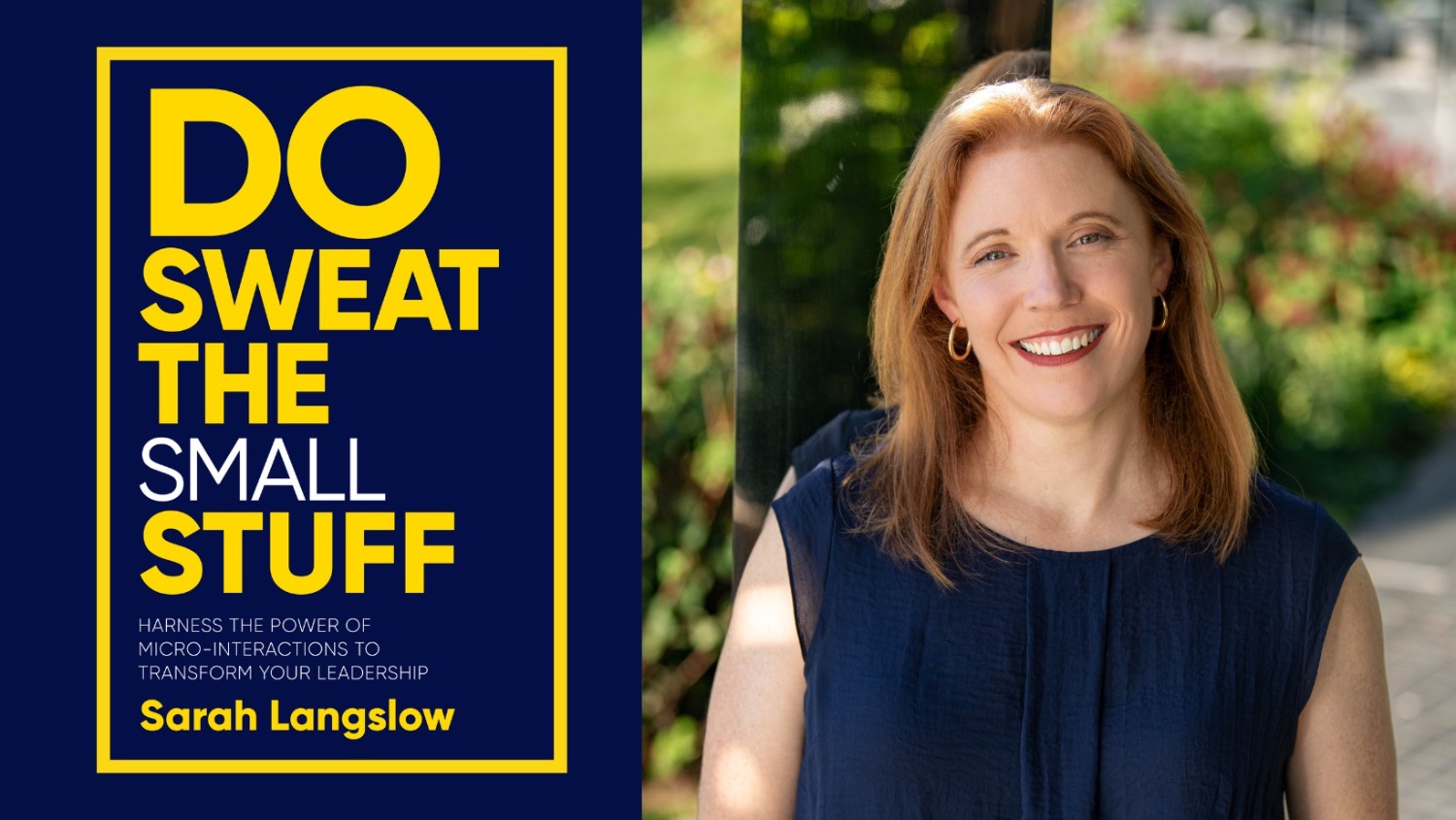
In the world of leadership, effective communication often transcends traditional task-based approaches, a notion brought to light by executive coach Sarah Langslow in her new book, Do Sweat The Small Stuff. This practical handbook delves into the crucial role of micro-interactions in shaping relationships and enhancing leadership effectiveness.
Langslow argues that while meeting organisational goals is essential, it is the everyday interactions between leaders and their teams that ultimately drive individual and collective performance. She emphasises that leaders who overlook these daily exchanges may struggle to cultivate the trust and engagement needed for both task completion and broader strategic changes.
The book is divided into three insightful parts. In the first section, Langslow outlines the significance of micro-interactions and their contribution to human-centred leadership. She stresses that effective leaders must be mindful of how their words and actions influence those around them.
The second section delves into the habits, behaviours, and listening skills that shape a leader’s interactions with their teams and the overall culture of the workplace. Langslow illustrates how these micro-interactions can either foster a positive environment or contribute to disengagement and low morale.
In the final section, she offers readers practical guidance on becoming the leaders they aspire to be. This includes relearning essential skills and reshaping their micro-interactions to align with their leadership intentions. The book is rich with reflection prompts, speaking exercises, and written tasks designed to encourage readers to engage actively with the material, thereby facilitating lasting behavioural changes.
Langslow is clear that leadership extends beyond the highest echelons of management. “We all lead, even if we don’t realise it,” she states. “Through our words and actions, we impact others, whether intentionally or not.” She warns that micro-interactions are never neutral; hence, it is vital for everyone within an organisation to acknowledge and take responsibility for their influence on others.
The author also highlights the pitfalls of focusing solely on deadlines and to-do lists. Such a narrow view can lead to team disengagement and decreased productivity. In contrast, prioritising people through active listening, positive role modelling, and open discussions can transform the workplace dynamics, making every interaction significant.
However, Langslow cautions that meaningful personal growth is not a quick fix. She encourages readers to commit to long-term development by embracing reflection, continuous learning, and being open to making mistakes. Understanding what resonates positively and what triggers resistance is essential in reshaping micro-interactions for better outcomes.
Do Sweat The Small Stuff serves as a crucial call to action for leaders aiming to foster a culture that inspires and engages employees. By treating their people as their most valuable asset and intentionally aligning their micro-interactions with their leadership values, leaders can create effective relationships that empower teams to perform at their best.
As Langslow aptly concludes, when micro-interactions are deliberately crafted, they become the building blocks of effective leadership, ultimately leading to a more engaged and productive workforce.