Oil prices climbed on Wednesday as oil prices Iran strikes fears deepened, with Brent crude advancing 0.92% to $95.52 a barrel and US West Texas Intermediate (WTI) rising 0.60% to $90.76, after a fresh round of American military action against Iran prompted retaliatory drone and missile attacks on US allies across the Gulf.
The back-and-forth comes at a moment of serious escalation in a conflict that is rattling energy markets and upending diplomatic efforts to find a ceasefire. Brent is the international benchmark most closely watched for oil traded across Europe, the Middle East and Asia; WTI is its American counterpart. Both have remained elevated as fighting around the Strait of Hormuz, one of the world’s most critical shipping chokepoints, continues.
US strikes hit Iranian nuclear site as Hormuz tanker is damaged
The US Central Command said its latest strikes ‘follow recent attempted attacks by the IRGC against commercial shipping in the Strait of Hormuz and against American service members,’ in a post on X. The Islamic Revolutionary Guard Corps (IRGC) is Iran’s elite military force.
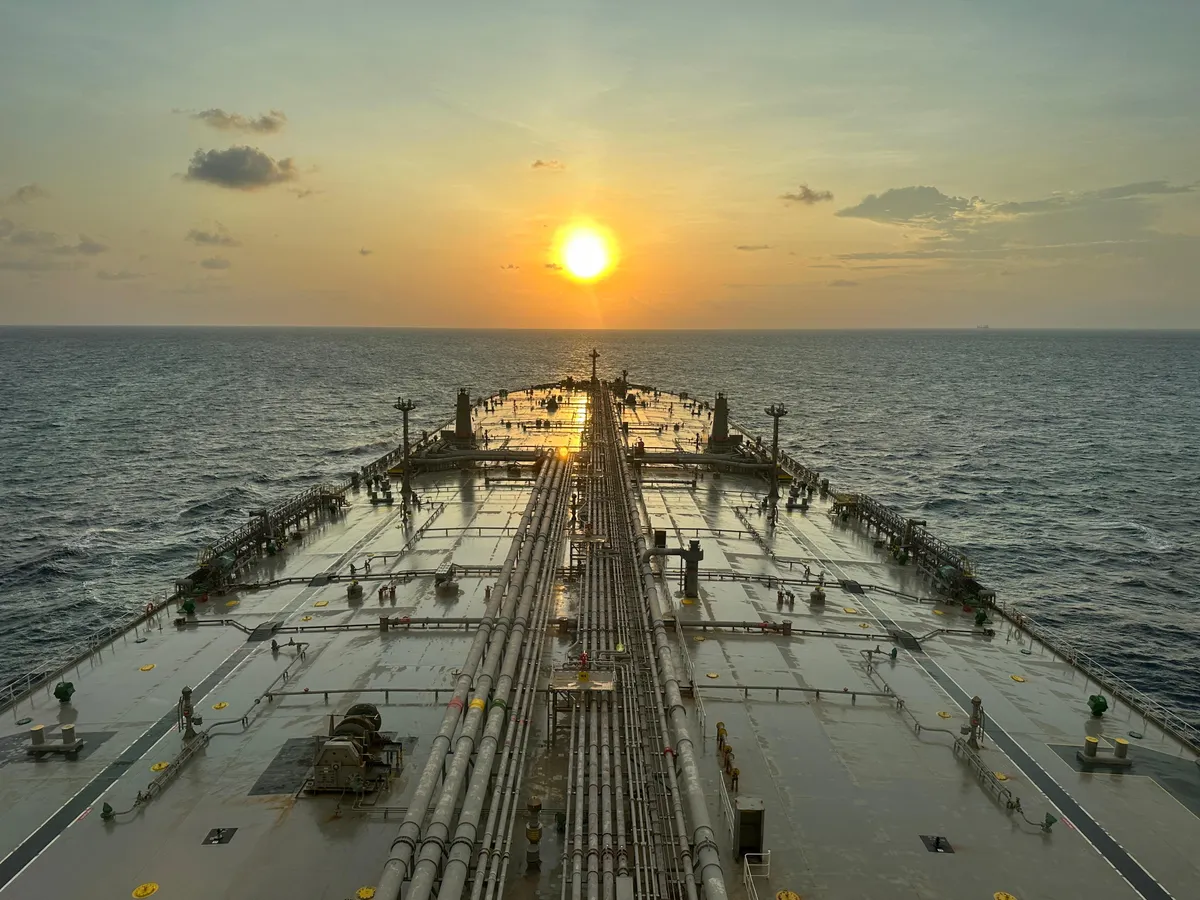
Among the targets hit was the partly built Darkhovin nuclear facility, Al Jazeera reported. A tanker was also struck by three unknown projectiles while transiting the Strait of Hormuz on Monday, according to the UK Maritime Trade Operations Centre, which tracks commercial shipping safety in the region.
President Trump, writing on Truth Social, said he was ‘not trying to force Iran to the bargaining table.’ He added: ‘I like our position now much better, with almost total control of the Hormuz Strait, and their economy totally collapsing.’
Iran’s drone and missile strikes cause fire at Kuwaiti power plant
Iran’s response has been swift and wide-ranging. The country launched drone and missile attacks on Bahrain and Kuwait on Sunday following the new US airstrikes, AP News reported. Tehran also threatened a ‘complete halt’ in negotiations to end the war if Washington continues its attacks, according to AP News.
The consequences on the ground have been immediate. Kuwaiti authorities reported that one of the Iranian attacks started a fire at a power and water plant, Al Jazeera said. Jordan, meanwhile, said it shot down three of the four Iranian missiles fired at its territory, also according to Al Jazeera.
In addition to those countries, Al Jazeera reported that Iran had attacked Kuwait, Jordan and Bahrain with incoming drones and missiles. The breadth of the strikes marks a considerable widening of the conflict beyond the two principal parties.
Oil prices Iran strikes keep market on edge, analysts warn
The impact on energy markets is being felt in both price levels and volatility. Edward Rosenberg, head of ETFs at Strategy Shares, said: ‘The longer the war with Iran goes on, oil prices will continue to stay elevated and volatile.’
Rosenberg pointed to a combination of factors pushing prices around: ‘Sanctions, stalled negotiations, and mixed signals on whether Iran wants the war to end are swinging prices day to day, not just holding them high.’
The Strait of Hormuz is the narrow waterway through which a substantial share of the world’s seaborne oil passes. Any sustained disruption there, whether through direct attacks on tankers or broader military activity in the region, has an immediate knock-on effect on global supply expectations and, in turn, on crude prices.
Iran’s threat to walk away from negotiations entirely adds another layer of uncertainty. If talks collapse, the prospect of a diplomatic off-ramp to the conflict recedes, which markets have historically treated as a reason to price in a longer period of supply risk. With both sides showing little sign of pulling back, traders and governments alike are watching each day’s developments closely to judge what the next session will bring.