EnQuest’s chief executive has publicly confirmed the company’s interest in an EnQuest bid for BP North Sea oil and gas assets, as BP presses ahead with the sale of a portfolio that Rystad Energy estimates is worth about $2.6 billion on a risked basis.
Amjad Bseisu made the confirmation in an interview with CNBC’s ‘Squawk Box Europe’ on Thursday, responding directly when asked whether EnQuest (which operates mainly in the UK Continental Shelf region) wanted to buy BP’s North Sea interests. His answer was a simple ‘yes.’
‘There’s only a handful of companies left, so there’s only a handful of companies that would be interested,’ Bseisu said.
BP puts six decades of North Sea history up for sale
BP announced on 31 July that it had launched a formal process to sell its UK North Sea business, a move that would represent a major retreat from a basin where it has operated for about 60 years. Reuters reports that Rystad Energy puts the risked value of the UK upstream portfolio at around $2.6 billion.
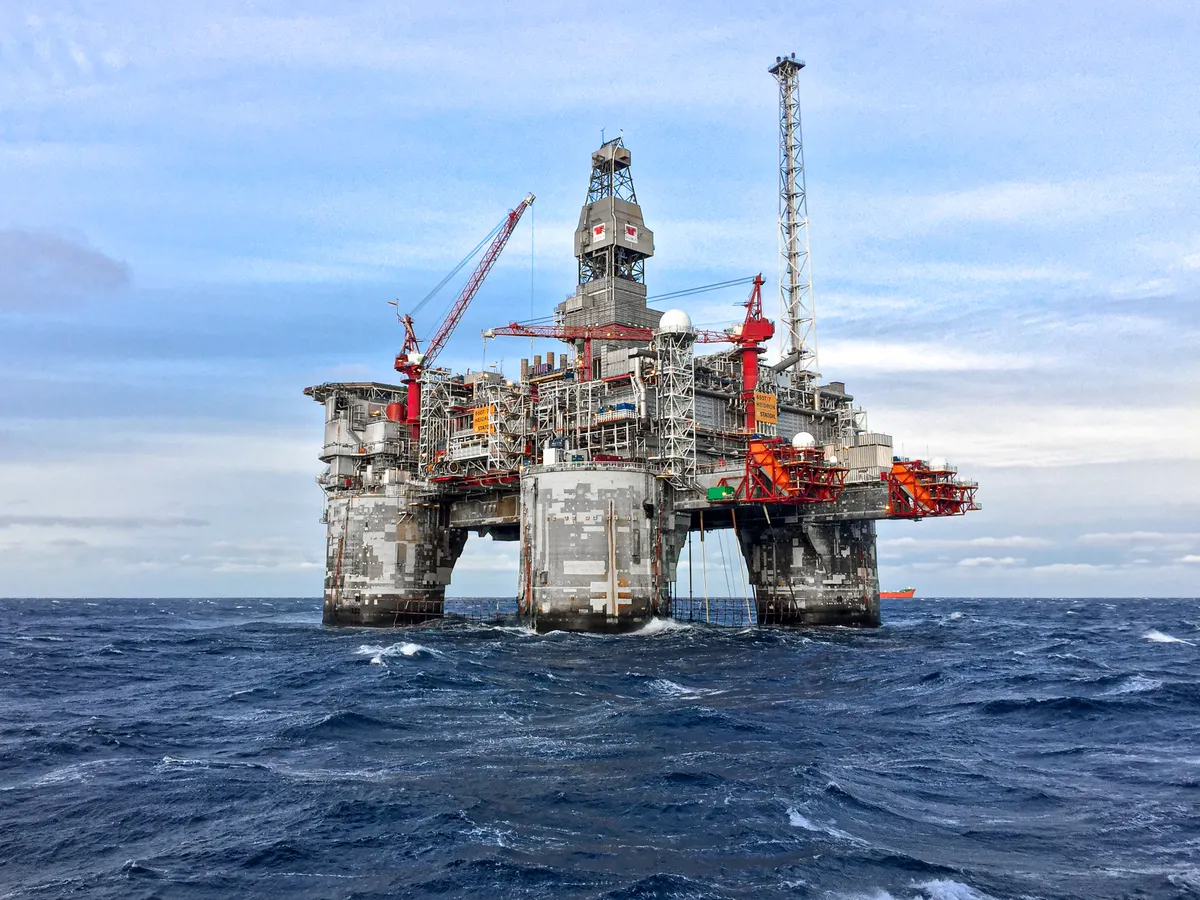
The scale of what is on the table gives a sense of why interest from potential buyers is measured: BP‘s North Sea portfolio comprises five production hubs. Two sit in the central North Sea (Andrew and ETAP) and three lie west of Shetland: Glen Lyon, Clair and Clair Ridge. Together they employ around 1,100 people, according to BP’s website.
The British North Sea currently accounts for about 5% of BP’s total oil and gas output, equivalent to roughly 117,000 barrels of oil equivalent per day out of a company-wide total of approximately 2.3 million barrels per day, according to Reuters. For BP, which is pushing through a broader strategic overhaul, the disposal would allow it to concentrate resources elsewhere. For whoever buys it, the prize is a substantial producing business in a mature but still active basin.
Bseisu pointed to the broader energy picture as a reason for optimism about North Sea investment. He said the UK now imports about half of its energy and that greater reliance on imports has pushed costs higher. He urged the government to support development of the country’s own oil and gas resources.
EnQuest bid for BP North Sea backed by deep decommissioning experience
EnQuest’s interest is not simply that of an opportunistic buyer. The company has built a specific position in North Sea operations and end-of-life field management that could make it a credible acquirer of mature assets.
According to data published on FT.com, EnQuest completed 47% of all Northern and Central North Sea well plug-and-abandonment activity between 2022 and 2024, a striking share of a technically demanding, costly process that every mature field must eventually go through. Shell also transferred its decommissioning operator role to EnQuest during 2024, further extending the company’s reach in that area.
That track record matters when assessing assets that, however productive now, will eventually require extensive decommissioning work. A buyer with proven capability in that area faces a different cost equation than one that does not.
The two companies also have a commercial history. In 2017, BP sold 25% of its stake in the Magnus oil field to EnQuest, together with associated pipeline infrastructure and a 3% stake in the Sullom Voe processing terminal in Shetland. That transaction gave EnQuest direct operational familiarity with some of the infrastructure that sits alongside the assets now being sold.
Strong first-half results underpin any pursuit
Bseisu was speaking after EnQuest reported an adjusted pre-tax profit of $54.6 million in the first half of the year, with revenues reaching $529.9 million and production rising 9%. The figures suggest the company has a functioning financial base from which to pursue a transaction, though the funding of a deal worth billions would naturally require further consideration.
Bseisu’s public confirmation of interest in an EnQuest bid for BP North Sea assets comes at a point when the number of realistic buyers is limited by both the scale of the portfolio and the specialist knowledge required to run it. As he put it, there are only a handful of companies left in the basin, and therefore only a handful that could realistically step in. BP’s formal sale process is now under way, and the field of candidates is expected to take shape in the months ahead.