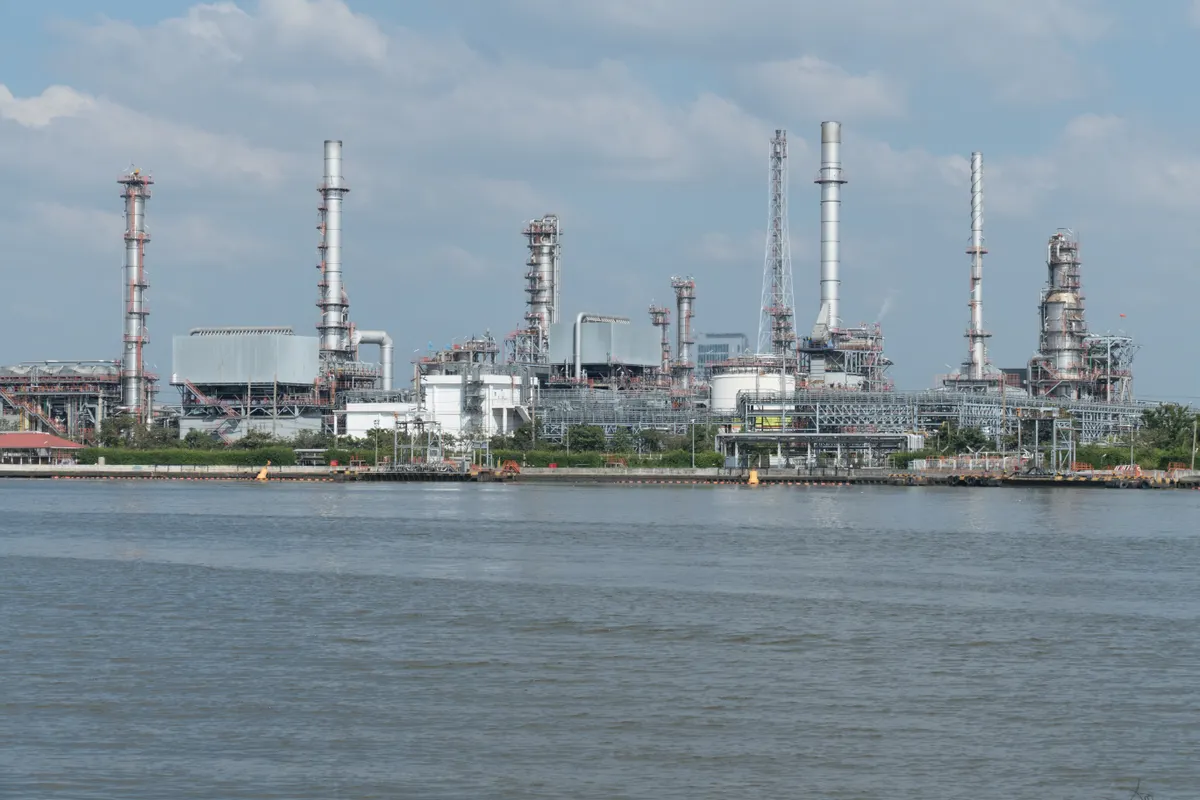
Houthi strikes on Saudi Aramco’s refining complex at Jazan helped drive oil prices to a six-week high on Monday, as a weekend of exchanges between the United States and Iran deepened an already volatile situation across the Middle East. Brent crude, the international benchmark, rose 1.3% to $97.52 a barrel, touching $97.93 at its peak, the highest level since 23 July. West Texas Intermediate, the US benchmark, climbed 1.3% to $92.68, briefly surpassing $93 a barrel, also a level last seen in late July.
Houthi strikes on Saudi Aramco take Jazan refinery offline
While initial reports left responsibility for the Jazan attack unclear, Maritime Executive has since reported that Yemen’s Houthi rebels carried out back-to-back strikes on the refining complex on Monday and Tuesday, deploying drones and missiles that started fires and took the facility offline. The Jazan plant processes 400,000 barrels of oil per day and is one of the largest and most modern refineries in the region. According to Maritime Executive, this is the second time this year that the Houthis have inflicted significant damage on the facility.
The attack on Saudi Aramco‘s Jazan complex adds a new dimension to a conflict that, until now, had centred largely on direct US-Iran exchanges and Iranian retaliatory strikes on American military bases. IBTimes has described the strikes as representing a direct attack on core Saudi oil-export infrastructure for the first time since 2022, a widening of the conflict’s front lines that draws in Gulf energy production at a particularly sensitive moment for global supply.
US and Iran trade blows over the weekend
The surge in prices followed a sharp escalation over the weekend. The US military struck three Iranian oil tankers on Saturday after Iran launched ballistic missiles at two Navy warships, according to US Central Command. CENTCOM said the three Iranian vessels are part of what it described as a ‘multibillion-dollar shadow network’ that funds Iran’s Revolutionary Guard and its regional proxies.
Iran’s Foreign Ministry issued a statement on Saturday, denouncing the attacks on the tankers as a ‘war crime’ and an act of ‘economic warfare.’ The confrontation came roughly a week after fighting between the two sides resumed following about a month of relative calm, in a conflict that passed the six-month mark in August.
Before the weekend’s events, oil markets were already primed for turbulence. The broader US-Iran conflict had kept traders on edge for months, with periodic flare-ups disrupting an otherwise fragile supply picture. The Houthi campaign against Saudi infrastructure, now entering what Maritime Executive describes as its second major strike on Jazan this year, is stretching both the geographical and political scope of the fighting.
Fuel costs rising as tensions keep oil elevated
Elevated crude prices have fed through directly to consumers. Petrol and diesel both hit record highs for a Labor Day weekend, a period of traditionally high demand in the United States. Sustained pressure at the pump tends to follow when oil benchmarks remain at these levels, and traders will be watching closely to see whether output from Jazan can be restored quickly or whether the damage runs deeper.
The Jazan facility’s capacity of 400,000 barrels per day means any prolonged outage removes a meaningful volume of refined product from regional markets. Whether that shortfall is covered elsewhere will partly determine how long crude prices hold at current levels. For now, the combination of direct US-Iran military action, Houthi drone and missile strikes on Gulf infrastructure, and already-tight global supply is keeping oil firmly above the prices seen for most of the summer.