The US Iran oil price surge pushed Brent crude above $100 a barrel for the first time in months on Wednesday, as markets absorbed the fallout from a weekend of military strikes between American forces and Iran that have rattled global energy supply routes.
According to the Wall Street Journal, front-month Brent crude settled up 3.4% to $101.21 a barrel on Wednesday, while front-month West Texas Intermediate (WTI) futures rose 3.2% to $96.05 a barrel, the highest closing levels for both benchmarks since 22 May. That followed Tuesday’s already elevated readings, when Brent gained 1.1% to $97.00 a barrel and WTI advanced 2.1% to $93.43 a barrel, as prices hovered at six-week highs.
What triggered the latest US Iran oil price surge
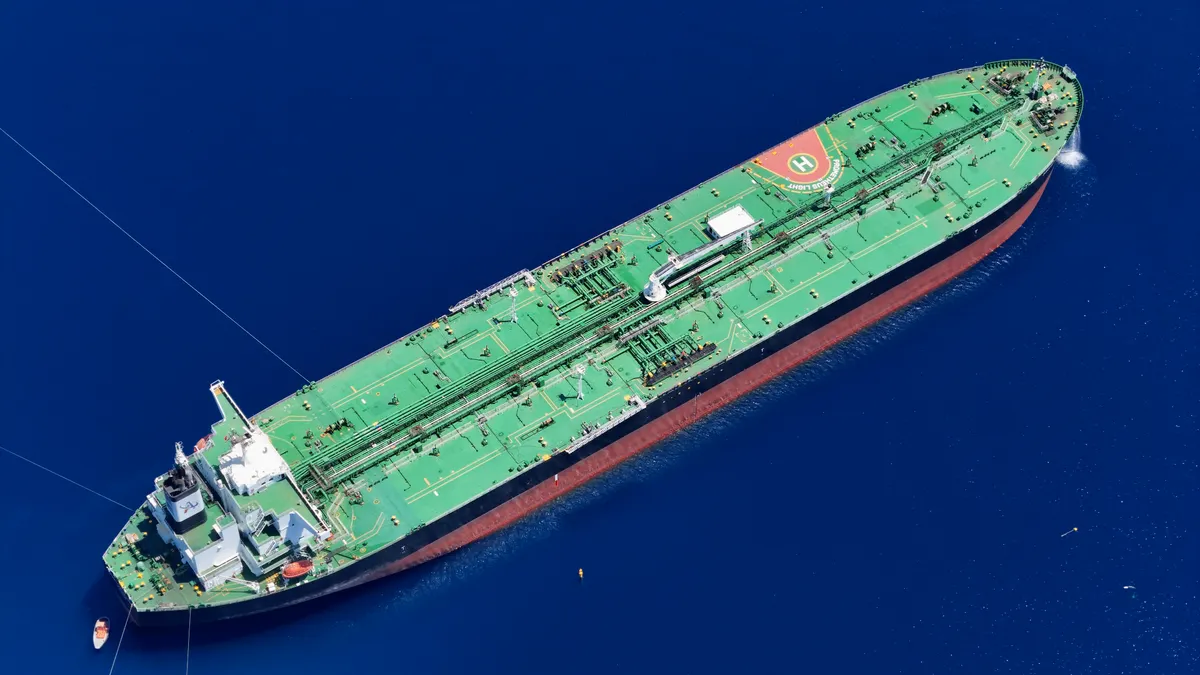
The immediate catalyst was a series of exchanges between US and Iranian forces over the weekend. The US military struck three Iranian oil tankers on Saturday after Iran launched ballistic missiles at two Navy warships. The Iranian Foreign Ministry, in a statement on Saturday, denounced the attacks on commercial vessels as a ‘war crime’ and an act of ‘economic warfare’.
Then, according to OilPrice.com, US forces also struck two Iranian rocket launchers on Larak Island, which sits inside the Strait of Hormuz, after Iran’s Islamic Revolutionary Guard Corps were observed preparing to launch rockets with sea mines into the Strait. The Strait of Hormuz is one of the world’s most critical oil shipping channels, carrying a large share of global seaborne crude exports.
The tit-for-tat strikes also helped push petrol prices higher, with gas prices hitting record highs. Iranian Parliament Speaker Mohammad Bagher Ghalibaf made Tehran’s position plain on Monday, writing on X: ‘Strike our assets and you get struck.’ That post came in direct response to Defense Secretary Pete Hegseth, who wrote that the US ‘will destroy (and sink)’ Iranian oil tankers if Iran fires on US vessels.
Months of disruption, and markets pricing in more
The current standoff is not a sudden eruption. According to a Library of Congress assessment, periodic Iranian attacks against shipping and retaliatory US strikes have severely disrupted traffic through the Strait of Hormuz for most of the past five months, as of early August 2026. That sustained pressure on one of the world’s busiest energy corridors has been steadily building into oil prices.
David Morrison, senior market analyst at Trade Nation, said the weekend’s events represented a clear shift in the conflict’s intensity. ‘This appears to be a major escalation and tensions have once again ratcheted higher,’ he said, noting that US Energy Secretary Chris Wright had said it may prove impossible to reach a deal with Iran to prevent it obtaining a nuclear weapon.
Goldman Sachs on Monday raised its price forecasts for Brent and WTI by $5 each, to $85 and $80 per barrel respectively for December 2026, and to $80 and $75 per barrel respectively for 2027. The bank said it expects Mideast shipping disruptions to continue into 2027, with production gradually recovering only in the second half of that year. ‘Markets are increasingly pricing a prolonged Mideast conflict,’ Goldman said, adding that Persian Gulf-to-China crude tanker rates in the second quarter of 2027 now reflect shipping disruptions lasting into that period.
President Trump, posting on Monday, offered his own forecast for where prices would ultimately head: ‘Oil prices will drop precipitously … when we WIN the war with Iran.’ For now, though, traders are watching the Strait of Hormuz closely, with Goldman’s revised outlook suggesting the pressure on energy markets from the US Iran oil price surge may be far from over.