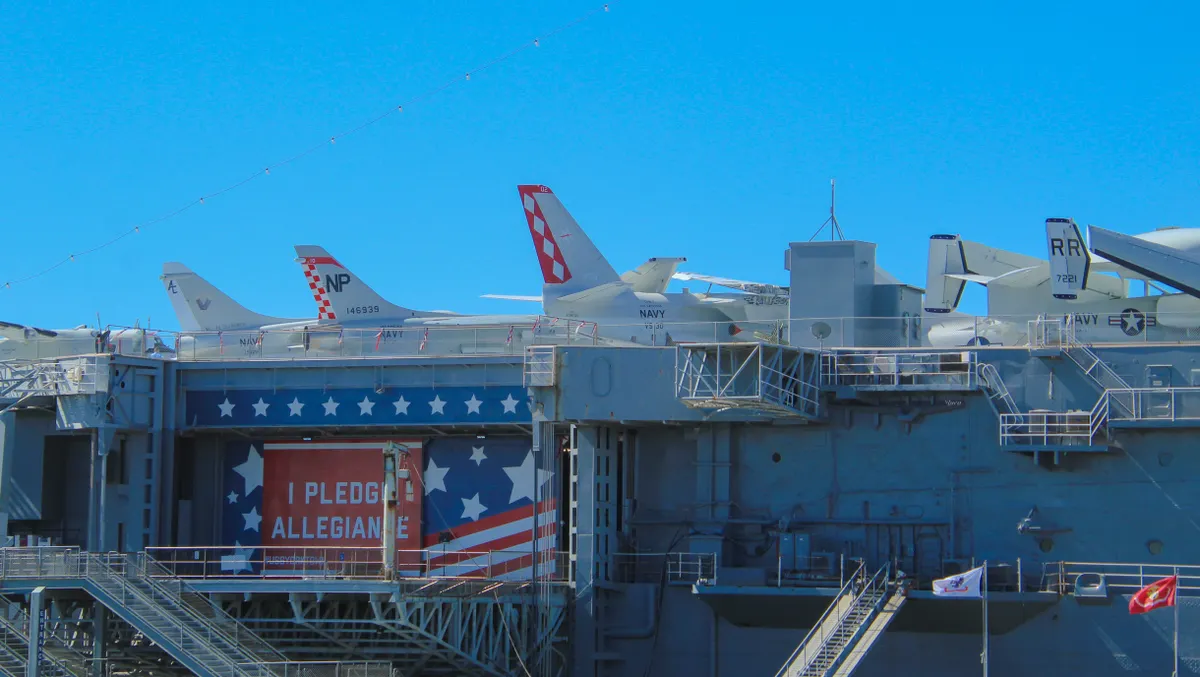
Concerns about USS Abraham Lincoln conditions have reached the US Congress, as American officials press ahead with an unprecedented economic squeeze on Iran and insist a naval blockade of the Strait of Hormuz can be sustained for as long as necessary.
The Lincoln is a US Navy aircraft carrier that has been at the centre of American operations in the Middle East for well over eight months. Understanding its situation requires knowing how the ship ended up there: according to Prothom Alo, the Lincoln departed California in November 2025 for duty in the South China Sea and was rerouted to the Middle East before US-Israeli attacks on Iran that began in late February. That change of course set in motion a deployment far longer than anyone aboard had been told to expect.
A deployment stretched far beyond its limits
The carrier has now been deployed for over 250 days in the Middle East, with its original return expected in May. Replacing it is the USS George Washington, whose strike group departed Vietnam on 12 August, the Navy confirmed. The scale of what the Lincoln’s crew has been asked to do is considerable: CBS News has reported that US combat aircraft have flown more than 10,000 sorties from the carrier over the past eight months.
It is against that backdrop that reports of deteriorating conditions aboard the ship have drawn public attention. US Defense Secretary Pete Hegseth told reporters that accounts of food shortages, declining morale, and sailors attempting to jump overboard were ‘completely misrepresented.’ He added that the military can maintain a naval blockade of Iran ‘indefinitely,’ rotating ships in and out ‘as we have, and we’ll continue to.’
Not everyone in Washington has accepted that framing. Rep. Mike Levin (D-Calif.) said he had written to Hegseth and Acting Secretary of the Navy Hung Cao to raise what he called serious concerns. ‘The reports coming from military families and loved ones about the conditions aboard the USS Lincoln are simply unacceptable,’ his letter read. ‘Reports include concerns of moldy showers, broken toilets, lack of hot water, lack of access to fresh produce, and supply shortages.’ The letter also said sailors and marines are facing an ‘overwhelming workload’ contributing to ‘extreme fatigue and burnout.’
Families back home have faced their own frustrations. WBAL-TV has reported disruptions to the ship’s mail system that have left many care packages lost in transit for months, cutting off a basic lifeline for crew members on an already extended tour.
Economic isolation and a blockade ‘like the world has never seen’
Beyond the welfare questions surrounding the Lincoln, officials have been setting out a broader strategic posture towards Iran. In an interview with Newsmax, Bessent said the approach would be ‘a combination of economic isolation like the world has never seen before, and the continued blockade in the Strait of Hormuz that will keep anything from going in or out of the Iranian ports.’ He offered no further detail on what the economic measures would involve.
The Strait of Hormuz is a narrow waterway between the Arabian Peninsula and Iran through which a large share of the world’s oil passes. Blocking it would have sweeping consequences for global energy supply, which is part of why the statement drew attention.
USS Abraham Lincoln conditions have also become a subject of dispute at the level of information warfare. US Central Command posted on X that reports of a brawl aboard the carrier were false and that no service members had died. That rebuttal came after Iranian media claimed on Tuesday that seven US Navy personnel had been killed and several others wounded in what it described as ‘a violent clash’ on the Lincoln. Central Command flatly denied those claims.
With the George Washington strike group now en route, the question of how quickly it can relieve the Lincoln’s crew, and what condition that crew will be in when it does, is one the Pentagon will be under pressure to answer. Rep. Levin’s letter is awaiting a formal response from Hegseth and Hung Cao.