Iran has firmly rejected the Strait of Hormuz territorial claim made by US President Donald Trump, insisting the waterway belongs to Iran alone, as a bulk carrier in the strait was reportedly hit by an unknown projectile and diplomatic efforts between Washington and Tehran remained stalled.
The confrontation over the strait’s status escalated late on Friday when Iran’s Deputy Foreign Minister Kazem Gharibabadi posted a direct rebuttal on X. ‘The Strait of Hormuz has been Iranian, is Iranian, and will remain Iranian; this strait will only be closed and opened under Iran’s command,’ he wrote. ‘The Strait of Hormuz cannot be seized by tweet, nor by aircraft carrier, nor by issuing an order, nor by an election speech.’
The remarks followed Trump’s declaration that after the US defeats Iran, ‘pretty soon I’ll be declaring the Hormuz Strait a territory of the United States.’ Trump, who has cited the phrase ‘to the victor belong the spoils,’ had also floated the possibility of imposing tolls on shipping passing through the strait once the conflict ends, though he later dropped that idea.
No negotiations, Qatar and Pakistan carrying messages
Any prospect of a diplomatic breakthrough appears distant. Iran’s foreign minister was quoted saying the two sides do ‘not have anything like a ceasefire.’ Iranian news outlet Shahrara News quoted Seyed Abbas Araghchi as saying early Saturday: ‘No negotiations have been held between us and the United States at this time. Qatar and Pakistan are exchanging messages between the parties and are in contact with us, but this does not mean negotiations.’
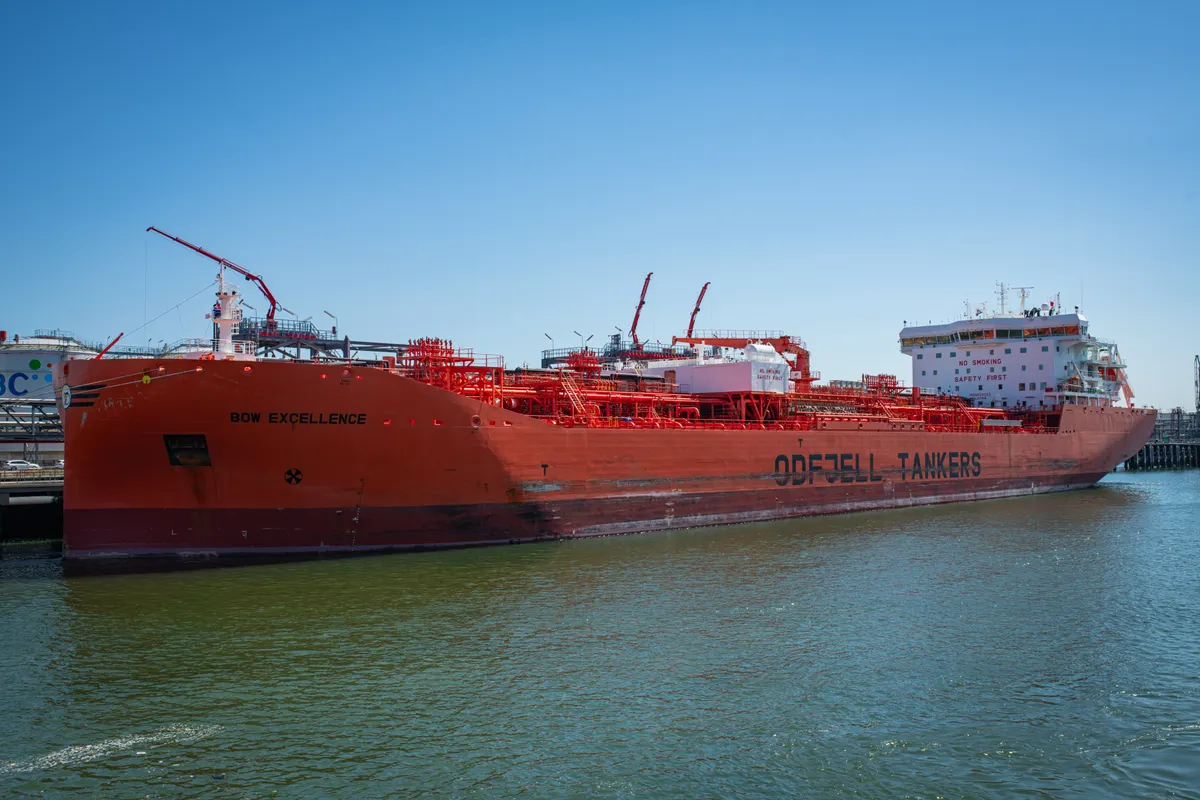
On the water, the United Kingdom Maritime Trade Operations Centre, an organisation backed by the British Navy, said on Saturday it had received a verified report of a bulk carrier ‘being struck by an unknown projectile which has hit the hull.’ Since an interim ceasefire broke down in June, shipping in the strait has repeatedly come under fire from Iranian projectiles, while the US has struck Iranian targets as part of its blockade of Iranian ports.
Energy prices have remained elevated compared to pre-war levels throughout the conflict. Trump addressed that directly on Friday, telling Americans they would need to tolerate slightly higher fuel costs. ‘So for you to pay a tiny little bit more for your gasoline, just remember you’re doing it so that a very evil country cannot have, a country that really is the number one state sponsor of terror in the world,’ he said. The average price of a gallon of gasoline across the US stood at $4.07 on Saturday, according to the American Automobile Association, up from a year-ago average of $3.15.
Carrier deployments stretched to breaking point
The US military is pressing ahead with the blockade. Treasury Secretary Scott Bessent said in a Newsmax interview on Thursday that the US would apply economic measures ‘that have never been seen on Iran,’ describing ‘a combination of economic isolation like the world has never seen before, and the continued blockade in the Strait of Hormuz that will keep anything from going in or out of the Iranian ports.’ Defense Secretary Pete Hegseth separately said the military can sustain a naval blockade ‘indefinitely,’ with the Navy rotating ships in and out ‘as we have, and we’ll continue to.’
The human cost of those extended deployments is coming under growing scrutiny. The USS Abraham Lincoln has been deployed for more than 250 days in the Middle East, well beyond an expected end date in May. Reports have emerged about poor conditions aboard the vessel, including food shortages, mouldy showers, broken toilets, a lack of hot water and supply shortages. Hegseth claimed those reports were ‘completely misrepresented,’ but Rep. Mike Levin wrote to Hegseth and the acting Secretary of the Navy to raise concerns, saying conditions described by military families were ‘simply unacceptable.’ The letter also cited an ‘overwhelming workload’ contributing to ‘extreme fatigue and burnout’ among sailors and Marines.
The strain on carrier crews is not isolated to the Lincoln. According to CNN, the USS Gerald R. Ford completed a 326-day deployment that included operations against Iran and Venezuela. The Guardian reports that the Ford’s 326-day tour marked the longest US carrier deployment since the Vietnam War, underlining how far the demands of the current conflict have stretched the Navy’s resources.
Relief for the Lincoln’s crew is on its way, but not immediately. The USS George Washington departed Vietnam on 12 August, according to a Navy statement. The BBC reports the George Washington was near Malaysia and could arrive in the Middle East region in about nine days. US Central Command has said reports of a brawl aboard the Lincoln are false and that no service members have died, a rebuttal to claims by Iranian media that seven US Navy personnel were killed ‘in a violent clash’ on the vessel.