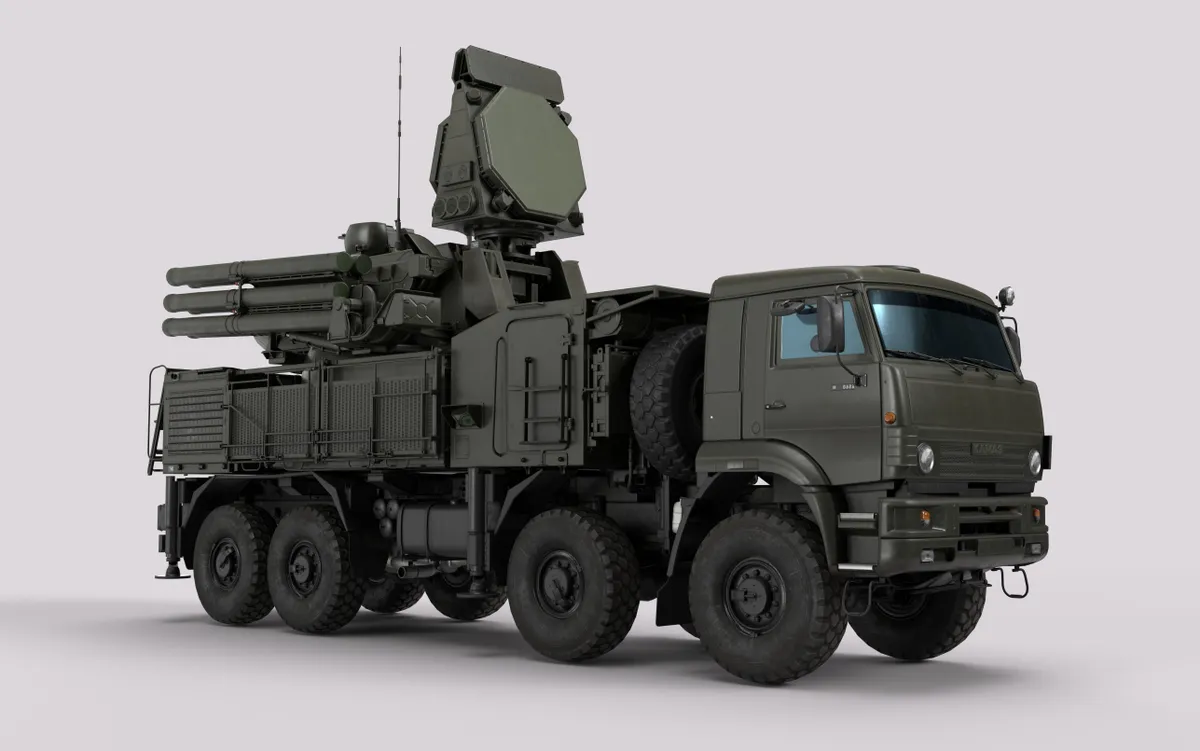
Iran has considered carrying out attacks on US targets in Europe if the conflict escalates further, the Financial Times reported, citing two regime insiders. US assets in Bulgaria and Cyprus were weighed as potential targets, according to that report. CNBC said it had reached out to Iran’s Ministry of Foreign Affairs for comment but had not independently verified the story.
The development comes as the wider conflict shows no clear path to de-escalation. Negotiations between Washington and Tehran have stalled, with little sign that talks will resume, leaving both sides to consider their next moves in a prolonged confrontation.
UAE suspends trade as missile threat grows
The United Arab Emirates on Wednesday said it had paused all ‘trade, commercial exchanges, and financial transactions’ with Iran until further notice. The move followed a warning from the UAE’s Ministry of Defense the previous day that it had detected two ballistic missiles launched from Iran toward its territorial waters.
The scale of the missile threat the UAE has faced puts that announcement in sharper context. According to Wikipedia’s account of the UAE’s role in the 2026 Iran war, as of 9 April 2026 the country had intercepted and destroyed 537 ballistic missiles, 2,256 drone attacks and 26 cruise missiles fired from Iran, using THAAD and Patriot missile defence systems acquired from the United States. That campaign began on 28 February 2026, when Iran launched a multiday series of missile and drone strikes on the UAE following coordinated US-Israeli strikes on Iran.
The trade suspension signals a significant shift for the UAE, which had previously maintained economic ties with Tehran even as the conflict intensified around it. By cutting off financial and commercial exchanges without a stated end date, Abu Dhabi has effectively aligned itself more openly against Iran.
Iran attacks US targets in Europe, a new potential front
The possibility of Iran attacks on US targets in Europe would represent a sharp expansion of a conflict that has until now been concentrated in the Middle East. Bulgaria and Cyprus both host US military infrastructure, and their inclusion as potential targets in Iranian deliberations suggests Tehran is exploring ways to pressure Washington beyond the immediate theatre of war.
President Donald Trump said on Tuesday that the US is not currently in any talks with Tehran and has no plans to restart them. He has also ruled out extending the 60-day ceasefire agreement, which expired on Monday after the deal effectively fell apart.
Control of the Strait of Hormuz remains a central point of contention. Trump has repeatedly stated that the vital shipping waterway is open and operating under US control. Observed ship traffic through the passage, however, remains extremely low. An attack on a cargo vessel transiting the strait earlier in the week killed one person. A spokesperson for the Iranian military, quoted by Fox News on Tuesday, said ships attempting passage through the strait would ‘find several beautiful holes in their hulls.’
Trump has also extended his warnings beyond Iran. On Monday, the president threatened to ‘bomb the s— out of’ Oman if the Gulf nation ‘gets in the way’ of US objectives in the Middle East. He separately ordered Defense Secretary Pete Hegseth to ‘substantially reduce’ joint military drills with South Korea, accusing Seoul of failing to assist with its operation in Iran and citing his friendly relations with North Korean leader Kim Jong Un.
With ceasefire talks collapsed, trade ties between the UAE and Iran severed, and Iranian planners reportedly considering Iran attacks on US targets in Europe, the conflict is pulling in an expanding cast of countries with no resolution in sight. The UAE’s next scheduled assessment of its air-defence posture will be closely watched as a measure of how far the confrontation has spread.