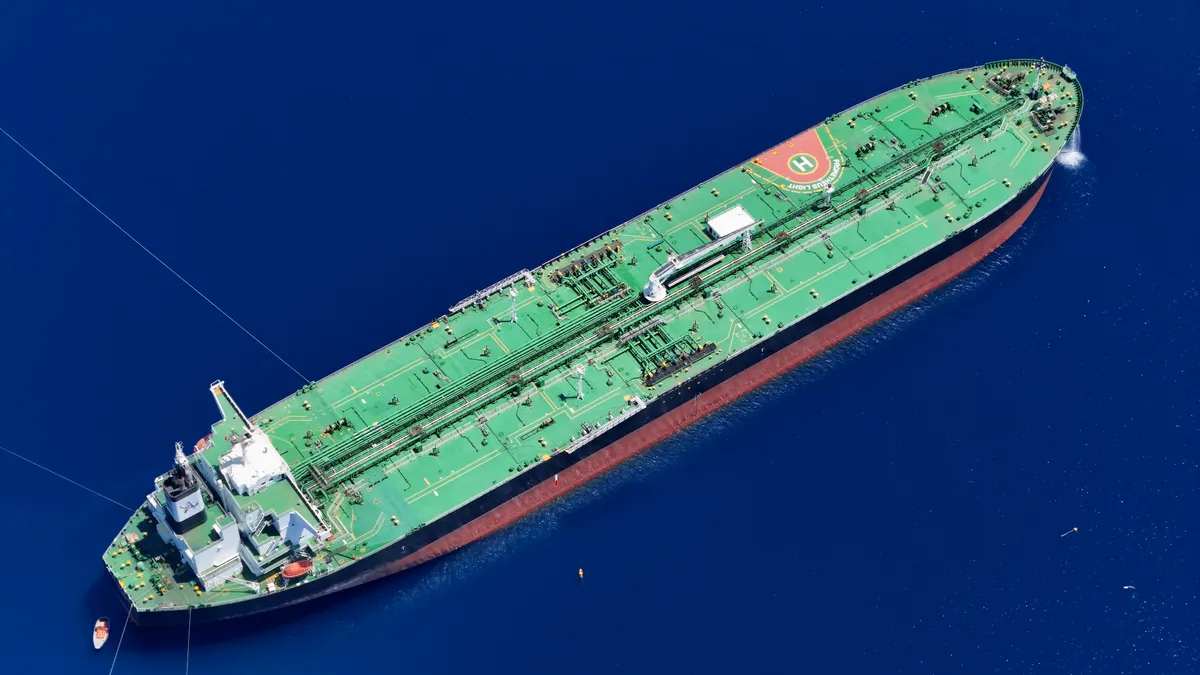
Two oil tankers struck Strait of Hormuz tanker mines and were forced to disembark their crews as the United States and Iran continued trading military blows, with oil prices surging and regional neighbours caught in the crossfire.
Iran’s Revolutionary Guards announced that the vessels had been disabled after ignoring warnings not to take what the Guards called an “illegal route” through the Strait. According to The Hindu, the Guards said on 18 July 2026 that both tankers exploded after hitting the mines. The same Guards statement said separately that they had also “stopped” four other ships attempting to transit the Strait of Hormuz around the same time, pointing to a broader effort to restrict commercial passage through one of the world’s most critical shipping lanes.
Strait of Hormuz tanker mines prompt US retaliatory strikes
The mine incidents did not stand alone. The US Central Command posted on X that it had struck air defence and communications sites and radar systems inside Iran in retaliation for what it described as Iran’s “recent attempted attacks” on commercial shipping in the Strait of Hormuz and on American service members. President Donald Trump, posting on Truth Social, said the US has “almost total control” over the Strait, and added that Tehran’s economy was collapsing. He said Iran was just “playing out the inevitable” and asked, “When are the Iranian people going to rise up and fight?”
Trump also said he was “not trying to force Iran to the bargaining table” as US forces completed a fresh round of strikes against the country on Tuesday.
Jordan and Bahrain targeted as conflict widens
Tehran responded to the American strikes by targeting US ally Jordan. Jordan’s armed forces said in a post on X that the country was struck by a missile attack originating from Iranian territory. A spokesperson said 10 of the 13 missiles were intercepted by Jordan’s air defence systems, with the remaining three falling in remote areas. No injuries or deaths were reported.
Bahrain also came under fire. Its armed forces announced on Instagram that they had intercepted and destroyed what they called “treacherous Iranian air strikes,” following an earlier alert from Bahrain’s interior ministry of a “potential threat.”
Oil prices jump as Saudi pipeline shuts down
Energy markets reacted sharply to the deteriorating situation. International benchmark Brent crude rose 4.5% to $94.52 a barrel on Tuesday, while US West Texas Intermediate futures added about 5% to $90.03 per barrel, reaching levels not recorded since 24 July. Prices continued to climb on Wednesday.
The pressure on oil supply was compounded by a separate development on the Arabian Peninsula. NewsNation reported that Saudi Arabia shut down its 745-mile (1,200-kilometre) east-west pipeline following an attack over the weekend. That closure matters because the pipeline is one of the main alternative routes for moving oil that would otherwise flow through the Strait of Hormuz, meaning the disruption compounds the already severe strain on global supply routes.
US Treasury Secretary Scott Bessent offered a longer-term view in a Fox Business interview on Tuesday. He argued that the Strait of Hormuz would become a “worthless piece of water” within two years as oil flows increasingly through overland pipelines that bypass it. The Saudi closure, at least for now, cuts across that argument.
Russia’s alleged role draws attention
The latest military exchanges coincided with an investigative report in the Financial Times, which claimed Russia was secretly helping Iran develop advanced supersonic cruise missiles capable of threatening US aircraft carriers and other warships in the region. The report added another layer of concern to an already volatile confrontation.
The strikes on Sunday were, according to the Trump administration, part of a broader campaign it has labelled an “economic D-Day” against Tehran’s backers. US Treasury Secretary Bessent’s comments about the Strait’s future relevance underscore how Washington is framing the conflict: not just as a military contest but as an effort to reshape the economics of the region’s energy trade.
For now, the Strait of Hormuz tanker mines remain in place, the shipping lane remains contested, and both sides show no sign of stepping back.