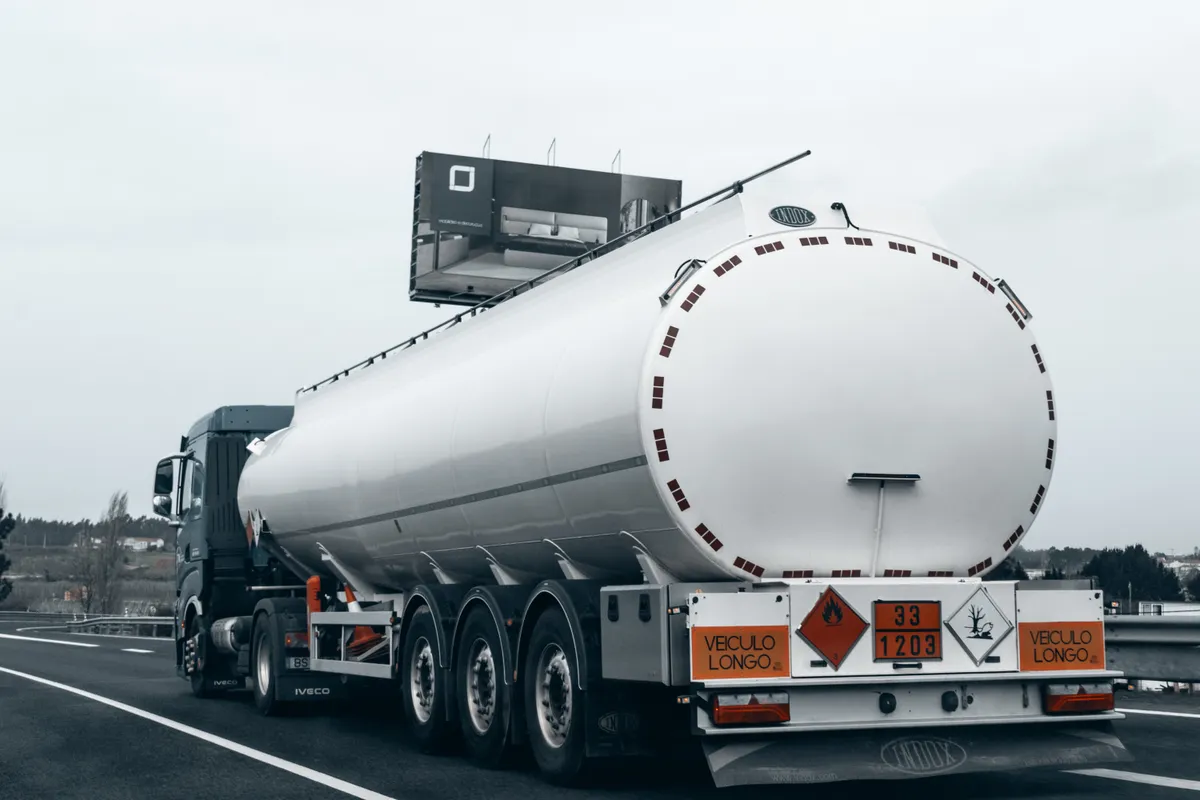
The diesel export ban impact from Russia, combined with refinery shutdowns across the Middle East, has pushed diesel prices to record levels and is feeding through to the cost of everyday goods. Two conflicts, thousands of miles apart, have combined to remove roughly 5 million barrels per day of refining capacity from global supply.
Diesel powers the lorries, trains and ships that move almost everything consumers buy. When its price rises sharply, those costs do not stay at the fuel pump: they spread through supply chains and land on shop shelves.
How the diesel export ban impact unfolded
Ukraine’s sustained strikes on Russian refining infrastructure have forced Moscow to restrict diesel exports. The effect on actual shipments has been dramatic. According to Reuters, Russian diesel and gasoil loadings fell to just 234,000 barrels per day in the first ten days of July, down from 400,000 bpd in June and sharply below the 2025 average of around 817,000 bpd. That is a collapse in export volumes by more than two-thirds compared with recent norms.
To understand why that matters globally, consider Russia’s position in the diesel market. OilPrice.com reports that Russia produced 81.6 million tonnes of diesel in 2024 against domestic demand of around 51 million tonnes, meaning the country was exporting a substantial surplus that buyers around the world had come to rely on. That surplus is now largely gone.
Andy Lipow, president of Lipow Oil Associates, told CNBC that Russia’s export ban affects about 800,000 bpd of supply. The country had been a reliable supplier to markets in Europe, Latin America and Asia. Data from Kpler shows that Turkey was bringing in 222,000 barrels per day from Russia in June, while Brazil was importing 135,000 barrels per day. Both countries now face the task of finding alternative sources in a market where supply is already stretched.
Middle East disruptions add to the squeeze
Russia is only half the problem. In the Middle East, Iran’s attacks on tankers in the Strait of Hormuz and on regional energy infrastructure have taken further refining capacity offline. Lipow said disruptions in the Strait of Hormuz have affected about 1.2 million bpd of supply. Iran’s Houthi allies also knocked out Saudi Arabia’s Jizan refinery, which produces around 200,000 bpd.
Gary Simmons, chief operating officer at Valero, told investors on the company’s 30 July earnings call that the wars had shut down refineries with about 5 million barrels per day of combined capacity. Brian Mandell, executive vice president for marketing at Phillips 66, was equally blunt on his company’s 5 August earnings call: ‘Refining fundamentals are very tight and getting tighter with the issues in Russia and the Mideast.’
Lipow told CNBC that about 8% of the diesel needed to supply global demand of 28 million barrels per day is disrupted right now. That may sound like a modest fraction, but commodity markets are sensitive to even small imbalances between supply and demand, and the disruptions are occurring simultaneously rather than in sequence.
The price reaction has been sharp. Reuters reported that US ultra-low sulphur diesel futures surged 11% in a single session to $154 a barrel, representing an $80 per barrel premium over WTI crude. Premiums of that scale reflect just how tight the market has become.
The cost passes to consumers
For ordinary households, the concern is not just what happens at filling stations. Diesel is the fuel of freight: the lorries that restock supermarkets, the trains that carry goods across continents, the ships that bring imported products to port. When diesel costs more, everything those vehicles carry costs more to deliver.
Lipow put it plainly: ‘Diesel is a stealth tax. The higher fuel cost is passed on to the consumer in the form of higher prices for the goods and services that are delivered by truck and rail.’
With Russian export volumes still far below their 2025 average and no resolution in sight in either conflict, buyers in Turkey, Brazil and elsewhere are actively searching for alternative suppliers in a market that has very little slack to absorb the shortfall.