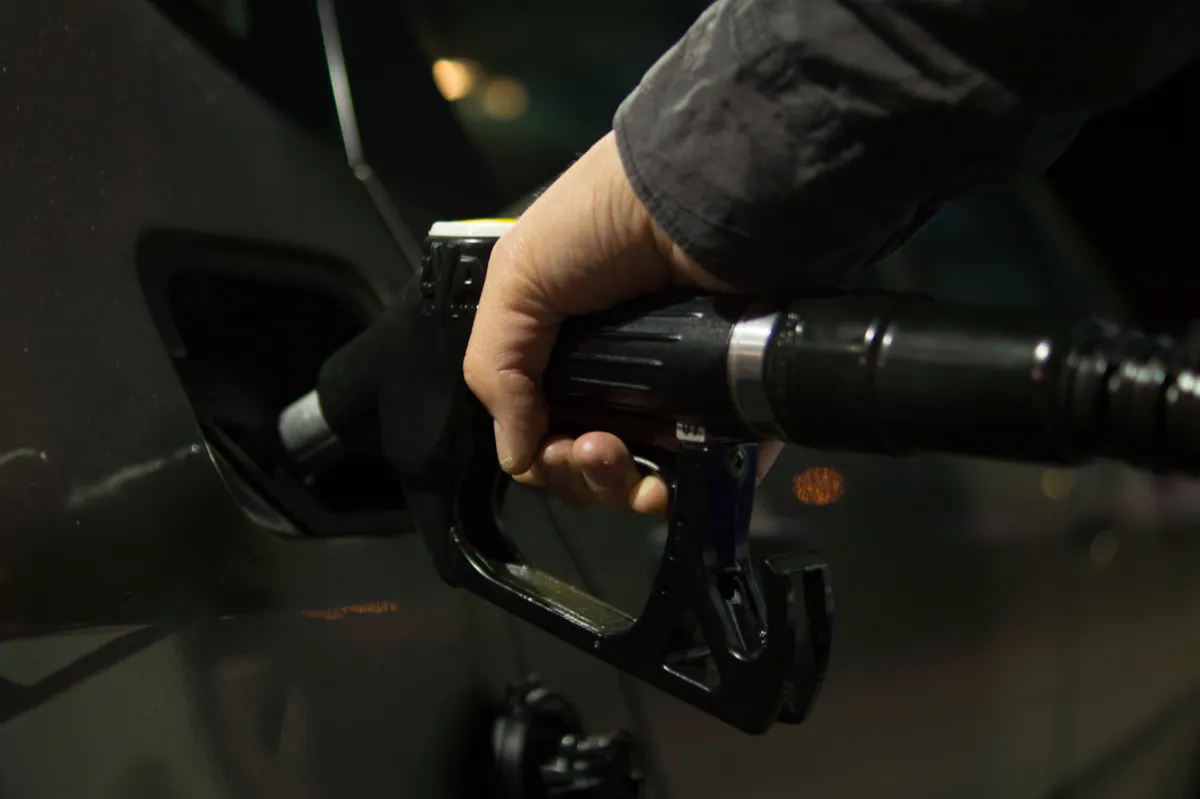
UK inflation fuel prices have pushed the headline rate to its highest point in five months, with the annual rate climbing to 3.1% in August from 2.9% the month before, according to the Office for National Statistics (ONS). Petrol, diesel and airfares were the main culprits, driven largely by the continuing conflict in the Middle East and its disruption to global oil supplies.
Motor fuel prices rose by 23% compared with August last year. Between July and August alone, average petrol prices climbed by 9.1p to reach 161.3p per litre. ‘This is the highest price recorded since November 2022,’ the ONS said, a level last seen when Russia’s full-scale invasion of Ukraine was pushing up global energy costs. Diesel also rose sharply over the same period.
Oil hit more than $91 a barrel as the US-Israel war with Iran continued, compared with around $73 just before hostilities began earlier this year. In recent days, Brent crude has surpassed $100 a barrel. The surge in crude costs fed directly into what drivers pay at the pump, as well as into the price of flying during the peak summer travel season.
How UK Inflation Fuel Prices Are Hitting Forecourts
The pressure is being felt acutely by independent fuel retailers. Goran Raven, owner of Essex petrol station RJ Raven, told the BBC that trade is around 20% down on this time last year. ‘Things are down. We’ve got lots of pressure on us at the moment,’ he said. Because his site holds only small tanks, a delivery tanker is needed almost daily and he must pay a daily spot price each time.
‘When the price goes up, we have to go up with it. There’s no way around it,’ Raven said. ‘The margins here are wafer-thin on fuel. People like to think we’re earning a lot on it. Unfortunately, we really aren’t. It’s single digits of pence we earn per litre.’
So far, the rise in fuel costs has not spread widely into other parts of the economy. Capital Economics noted that food and drink inflation held at 1.3% in the year to August. But its chief UK economist, Paul Dales, cautioned: ‘Everyone knows that bigger rises in inflation are on their way.’ Dales estimates that higher oil and gas prices, combined with businesses eventually passing on some of their higher energy costs, will push inflation to a peak of 4.2% in January.
Bank of England Holds Rates as Inflation Overshoots Target
At its meeting on 17 September 2026, the Bank of England’s Monetary Policy Committee (MPC) voted 6-3 to keep interest rates at 3.75%, according to Reuters. Three members voted for an immediate quarter-point rise: Chief Economist Huw Pill and external MPC members Megan Greene and Catherine Mann.
The Bank of England forecast that CPI inflation is expected to increase to around 3¾% in the fourth quarter of 2026 and to reach slightly above 4% in the first quarter of 2027. The Bank also found that around 0.7 percentage points of the 1.1 percentage point inflation overshoot relative to its 2% target was driven by the direct effects of energy prices, mostly motor fuels. ONS chief economist Grant Fitzner said: ‘Rising crude oil and petrol prices increased both the annual cost of raw materials and the price of goods leaving factories respectively.’
The government is cutting VAT on household electricity bills from 5% to zero on 1 October, saving a typical household about £45 a year. At the same time, the price cap on electricity and gas bills will rise by 4%, meaning a home using a typical amount of gas and electricity will pay £60 a year more. Yael Selfin, chief economist at KPMG, said the VAT cut will only partially offset the impact of higher gas prices. ‘If gas prices remain around current levels, household energy bills could rise by a further double-digit amount from January, with an even larger increase possible if wholesale prices climb further,’ she said.
Chancellor John Healey, who is preparing to announce his first Budget next month, acknowledged the global dimension: ‘The war in the Middle East is impacting on inflation worldwide, not just here at home. In our bills, our weekly shop and at the petrol pumps.’ He added that ‘despite this serious global uncertainty, our UK economy is proving resilient.’ The most recent figures showed the economy expanded by 0.4% in July, though growth for the second quarter slowed to 0.4% from 0.6% in the first.
For families already stretched, the coming months look difficult. Emma Ashfield, a nursery worker from Northern Ireland raising her eight-year-old daughter, said everything is already ‘extremely expensive’. With winter approaching, she said energy costs are a growing worry: ‘I find electric very pricey and it is costly trying to heat my apartment too.’