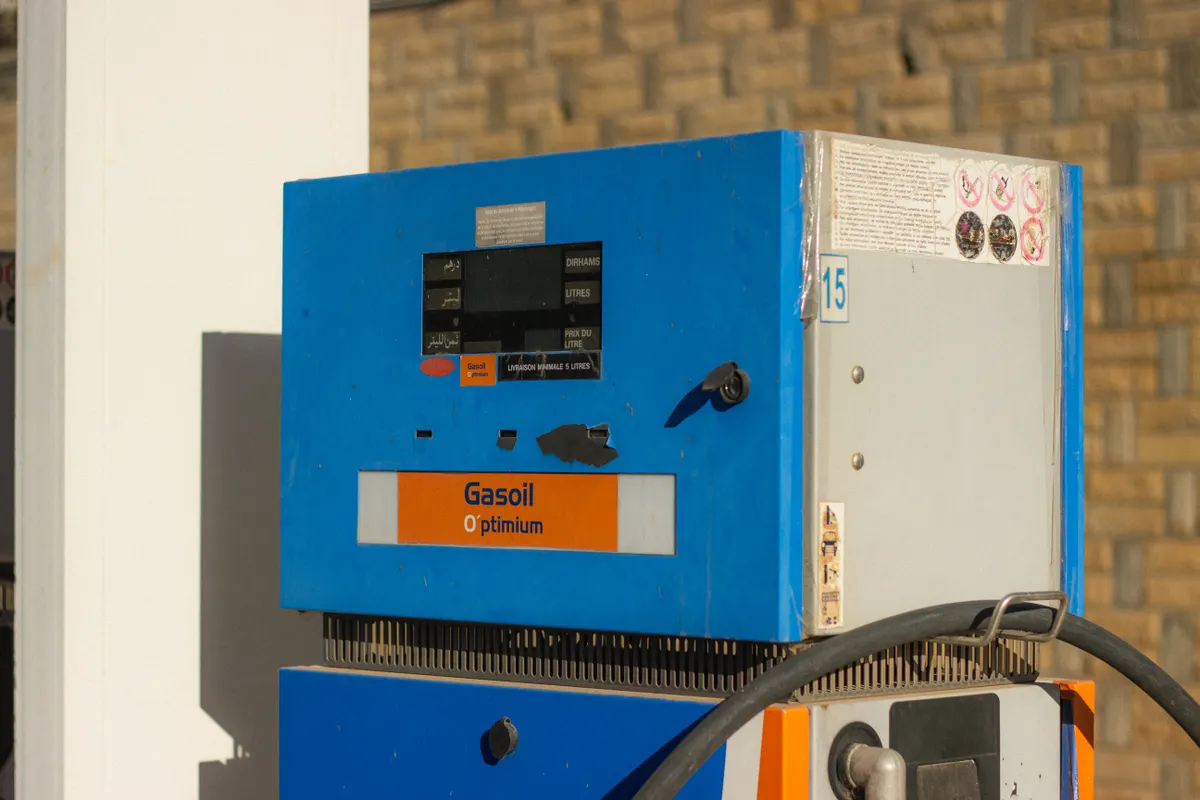
The California diesel prices crisis has pushed the cost of the fuel back above $7 a gallon, with war-related damage to refineries in Russia and the Middle East squeezing global supply and sending shockwaves through the wider economy. Bloomberg reports that the latest California average of $7.018 per gallon has topped the previous record of $7.012 set in June 2022, in the early months of Russia’s war in Ukraine.
Truckers in the state are paying about 30 cents more per gallon than they were a month ago, according to data from AAA. Compared with the same period last year, prices have risen by around $1.89 per gallon, a surge of about 37%.
How the California Diesel Prices Crisis Reached Record Territory
California already holds the record for the highest diesel price in the continental United States. Pump prices hit $7.75 per gallon in April after Iran disrupted tanker traffic through the Strait of Hormuz. They retreated below $6.50 in July once exports through Hormuz picked up following a memorandum of understanding between Washington and Tehran.
But prices have climbed again at a particularly awkward moment. Farmers are preparing for harvest, and freight volumes are picking up ahead of the holiday shopping season. Across the United States as a whole, diesel averaged $5.50 a gallon, an increase of about 40 cents over the past month and $1.81 higher than the same period in 2025.
Andy Lipow, president of Lipow Oil Associates, said California is more exposed than other states because it relies more heavily on costly crude oil imports and requires a special diesel formulation. Environmental regulations and state excise and sales taxes add further to the cost at the pump.
Wars and Refinery Damage Driving the Supply Crunch
Lipow estimates that the conflicts in Ukraine and Iran have together disrupted roughly 8% of the supply needed to meet 28 million barrels per day of global diesel demand. The consequences are felt in specific, measurable ways across two separate theatres of conflict.
Ukrainian drone attacks on Russian refineries have forced Moscow to ban diesel exports of around 800,000 barrels per day, Lipow said. Sanctions complicate repairs: Kevin Book, managing director at ClearView Energy Partners, told CNBC’s ‘Squawk Box’ that sourcing materials to fix the damaged facilities will be difficult for Russia. ‘That prolongs outages,’ he said. Prices are unlikely to ease, Book added, until damaged refineries come back online and more exports flow from the Middle East.
The disruption in the Strait of Hormuz has cut off roughly 1.2 million barrels per day of Middle East diesel exports, Lipow said. Iran’s Houthi allies in Yemen recently attacked Saudi Arabia’s Red Sea refinery in Jizan, shutting the facility and its 200,000 barrels per day of capacity at least until the end of August. Refiners in China have also been processing less crude and exporting less fuel, compounding the shortfall.
Dan Yergin, vice chairman of S&P Global, said in an interview with CNBC on 31 July that around 6 million barrels per day of global refining capacity is currently offline. ‘That’s affecting the whole economy,’ he said.
The Inflationary Reach of Diesel
The broader economic consequences of the California diesel prices crisis extend well beyond the forecourt. Bob McNally, president of Rapidan Energy, told CNBC’s ‘Squawk on the Street’ that diesel touches every corner of the economy: ‘in transportation, it’s in heating fuel, it’s in agriculture, it’s in industrial uses. It is the important macro fuel to watch.’ Consumers are already seeing the impact in higher grocery and retail bills. Book described the price surge as ‘a pretty significant inflationary concern’.
Refiners, meanwhile, are benefiting from the supply squeeze. The margin to turn crude oil into diesel has surged to $100 per barrel, which is higher than the price of US crude oil, trading at around $85.
The scale of the potential problem came into sharper focus in analysis published by CalMatters. Ryan Cummings, chief of staff at the Stanford Institute for Economic Policymaking, warned that a prolonged closure of key supply routes could push crude prices above $130 or $140 per barrel, driving California prices closer to $10 a gallon at some stations in a worst-case scenario. With harvests under way and the holiday freight season beginning, Book’s conclusion is stark: relief at the pump depends on damaged refineries coming back online, and Russia’s sanctions problem makes that timeline deeply uncertain.