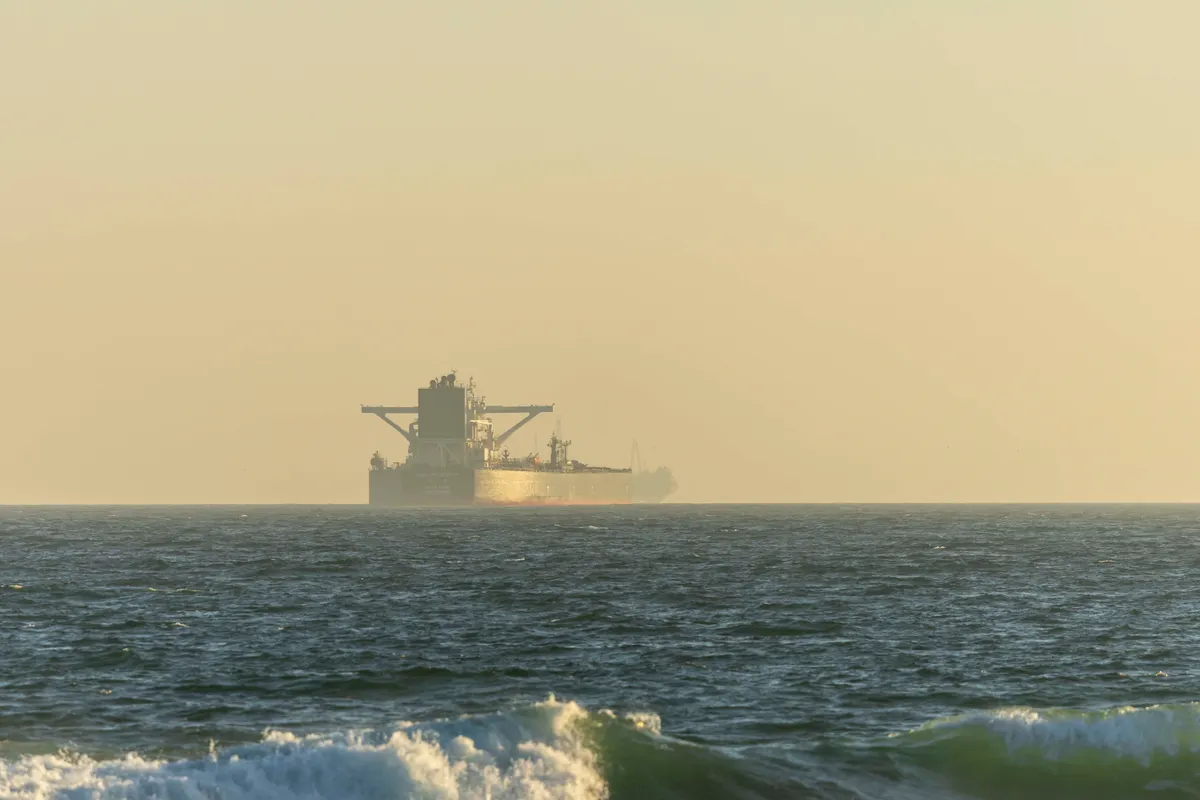
Somali pirate attacks in 2026 are back with a force not seen since the peak years around 2010, with several commercial vessels seized in recent months, ransom demands running into the millions, and a growing fear that regional chaos is giving armed groups the opening they need.
Piracy in the waters around the Red Sea and Gulf of Aden had faded over the past decade and a half, held in check by the US Navy and an international coalition of partners. But with American military resources pulled toward the conflict with Iran, and that conflict feeding wider instability across the region, enforcement has thinned and the pirates have returned.
A string of hijackings and rising ransom demands
The most recent seizure came on 17 August, when the cargo vessel Lutuf was boarded by eight armed men roughly four nautical miles off the Somali coast. According to Seatrade Maritime, the Lutuf is a Cameroon-flagged general cargo ship built in 1995 with a gross tonnage of 1,401 dwt. The vessel was reportedly en route from Turkey to Dar es Salaam, Tanzania, when it was taken.
That seizure came after the MT Asana, a Tanzanian-flagged oil and chemical tanker, was seized in the Gulf of Aden and taken toward Somalia’s Puntland region. Al Jazeera reported that the Yemeni coastguard said the Asana was seized about 26 nautical miles (48km) off Hadramawt province, placing the attack well out into waters that shipping companies had hoped were manageable.
As of 16 August, four merchant vessels were being held by Somali pirate groups, according to Seatrade Maritime: the Palau-flagged product tanker Honour 25, hijacked 21 April; the Saint Kitts and Nevis-flagged general cargo ship Sward, hijacked 26 April; the Togo-flagged product tanker Eureka, hijacked 2 May; and the Asana, hijacked 17 July. The Lutuf’s seizure a day later added a fifth vessel to that tally.
Ransom demands have climbed sharply. The Global Initiative Against Transnational Organized Crime, which has been tracking the 2026 resurgence, said in a recent report that pirates demanded as much as $10 million for the release of the Eureka. The Chinese fishing vessel Liao Dong Yu 578, hijacked in January and released in March, drew a reported ransom payment of between $1.2 million and $1.5 million.
Somali pirate attacks 2026: why the risk calculation has shifted
For the pirates themselves, the economics are hard to argue with. Somalia is currently grappling with drought, worsening food insecurity and shrinking humanitarian assistance. Against that backdrop, the risk-reward balance of attacking a vessel carrying a cargo worth many times a local annual income may look very different than it does to the shipping companies on the other end of those decisions.
Those companies are already under pressure. Houthi attacks in the Red Sea have forced vessels to hug the Somali coastline rather than take the safer, deeper-water routes, pushing ships closer to known pirate hotspots. Matt Reisener, Senior National Security Advisor for the Center of Maritime Strategy, put it plainly: ‘The Houthi attacks in the Red Sea have driven ships closer to the Somali coastline, near pirate hotspots, and given how high oil and gas prices are, these energy tankers have become extremely valuable and particularly vulnerable.’
That vulnerability is showing up in the data. Three of the four commercial vessels seized between April and July were tankers carrying oil products. As oil prices rise, so does the prize sitting in those hulls.
‘The piracy issue is definitely adding to acute uncertainty, and making those who have already decided to avoid the Red Sea stay firm in their decision,’ said Ian Ralby, CEO of I.R. Consilium and a maritime law and security expert. ‘Everybody is having to do almost daily gymnastics to try to recalculate what the risk is.’
Beyond the immediate economics, there is a longer-term concern about who the pirates may end up working alongside. UN reports have noted increasingly close ties between the Houthis and armed groups in Somalia, mainly through weapons transfers, training and intelligence support. Corey Ranslem, CEO at Dryad Global, warned of where that trajectory could lead: ‘If the Al-Shabaab and the Houthis formalise a relationship where they take control of the Red Sea, the Bab-el Mandeb, and the Gulf of Aden, and have the Somali pirates be a part of that militant organisation, it would fundamentally change the dynamic in the region.’
He added that such an arrangement could put Houthi missiles and drone technology into the hands of Somali pirates, at which point, as he put it, ‘risks grow disproportionately.’ With four vessels currently held, ransoms already in the millions, and the Lutuf the latest ship to be taken, that prospect is no longer purely theoretical.