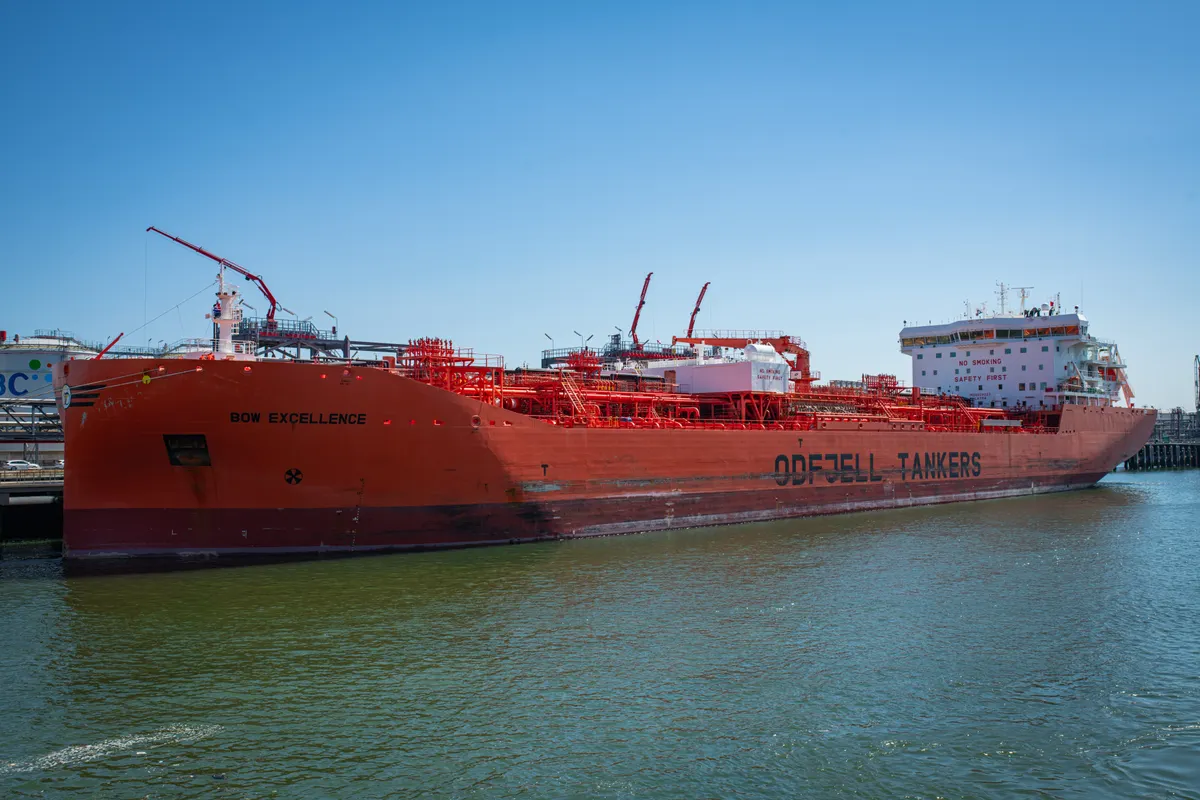
The Strait of Hormuz oil flow exceeded 17 million barrels in a single day last Monday, according to US Energy Secretary Chris Wright, who made the claim during an interview with CNBC’s Brian Sullivan in Venezuela on Wednesday. The disclosure came as Washington and Tehran traded military strikes, rattling global energy markets and sending US crude futures briefly to around $90 per barrel before they settled back, ending the day down about 1%.
The Strait of Hormuz is the narrow waterway between Iran and Oman through which a large share of the world’s oil exports passes. Any disruption there ripples almost immediately into global energy prices, which is why Wright’s reassurance that supply is moving freely carries weight beyond Washington.
Strait of Hormuz oil flow: US data versus private trackers
Wright said the figures his department is working from are higher than those reported by independent ship-tracking companies. His explanation: the US military and the Department of Energy have access to data that private firms miss, because a significant number of tankers transit the strait covertly, running at night with their transponders switched off.
The US military has established a shipping corridor along Oman’s coast specifically to protect tankers from its Gulf allies making that journey. Iran has repeatedly attacked vessels using the route, insisting that commercial ships instead use a northern corridor that passes through Iranian waters. At least two tankers came under attack in the strait this week, according to incident reports from the United Kingdom Maritime Trade Operations Centre.
‘With or without Iran, oil and gas will flow out of the Arabian Gulf region and it’s happening,’ Wright told CNBC on Wednesday.
Venezuela deal reshapes US position in Gulf energy politics
Wright’s visit to Caracas came five days after President Donald Trump announced an oil agreement with Venezuela’s interim government. The trip underlines how the two stories (Hormuz security and Venezuelan supply) are connected in the administration’s broader energy strategy: keep Gulf oil moving while simultaneously opening new Western Hemisphere sources.
The terms of the Venezuela arrangement are now becoming clearer. According to Channel News Asia, the US government is taking a 35% stake in North American Blue Energy Partners (NABEP), described as Venezuela’s second-largest private oil company. Under the same agreement, NABEP will grant Washington the right to buy 20% of the oil the firm pumps at production cost, a provision that could give the US a direct, low-cost source of crude outside the Gulf.
The 17 oil fields covered by the deal are also notable for what they represent geopolitically. Channel News Asia reports that the vast majority of those fields were previously in Chinese and Russian hands, meaning the agreement effectively displaces two of Washington’s principal strategic rivals from a significant slice of Venezuelan production.
Separately, Eyewitness News reports that oil giant Chevron is expected to announce a major expansion in Venezuela on the same day as the agreement is signed, a move that would significantly deepen US commercial involvement in the country’s oil sector.
Taken together, the Venezuela deal and the Hormuz corridor paint a picture of an administration trying to anchor its energy security on multiple fronts simultaneously: protecting existing Gulf supply lines while carving out new footholds in Latin America.
The immediate market concern, however, remains the strait. US crude’s brief spike to around $90 per barrel on Wednesday reflected how quickly traders respond to any sign of escalation near Hormuz, even when official reassurances are being offered at the same time. With Iran still actively challenging the US-protected corridor, the tanker attacks reported this week by the UK Maritime Trade Operations Centre suggest the route remains contested, whatever the volume of oil currently getting through.
Wright’s message from Caracas was unambiguous: the flow is continuing. Whether that holds as the military exchanges between Washington and Tehran develop is a question the energy markets will be watching closely in the days ahead.