Contributed content: this article was written by a third-party contributor and does not necessarily reflect the views of Humanima. Editorial and Advertising Policy
More than 130 manufacturers opened their factory doors to the public this week as part of National Manufacturing Day, giving students and local communities an opportunity to see what modern production actually looks like.
The event comes at an important time for the industry. UK manufacturers continue to report difficulties finding people with the skills they need, but the nature of those skills is changing as factories introduce more automation, digital systems and connected production equipment.
Make UK estimates there are around 47,000 vacancies across manufacturing, while half of manufacturers say skills shortages are their biggest barrier to growth. Its research also found that 99% believe access to skills will influence their future growth plans.
That presents the sector with two closely connected challenges. It needs to attract more people into manufacturing, but it also needs to ensure the people already working in the industry have the skills required as production technology changes.
Manufacturing jobs are changing
The image of manufacturing as predominantly manual factory work has been outdated for some time.
Engineering and production skills remain central to the sector, but they increasingly sit alongside programming, automation, data analysis, electrical engineering and digital technology.
That does not mean traditional engineering knowledge is disappearing. In many cases, the opposite is true. An automated production process still needs somebody who understands what is being manufactured and can recognise when the process is not producing the required result.
What changes is how knowledge is used.
A fabricator who once spent much of the working day manually setting and operating a machine may increasingly be responsible for programming jobs, setting tooling, checking components and overseeing several stages of an automated process.
The machinery can take over repetitive elements of production, but the operator’s understanding of the process remains important.
Automation does not remove the need for skilled people
This distinction matters because factory automation is sometimes discussed purely in terms of reducing labour.
For manufacturers facing recruitment difficulties, that can certainly form part of the business case. Automating a repetitive process can reduce the number of manual operations needed to manufacture a component.
But removing an operation is not the same as removing the need for skills.
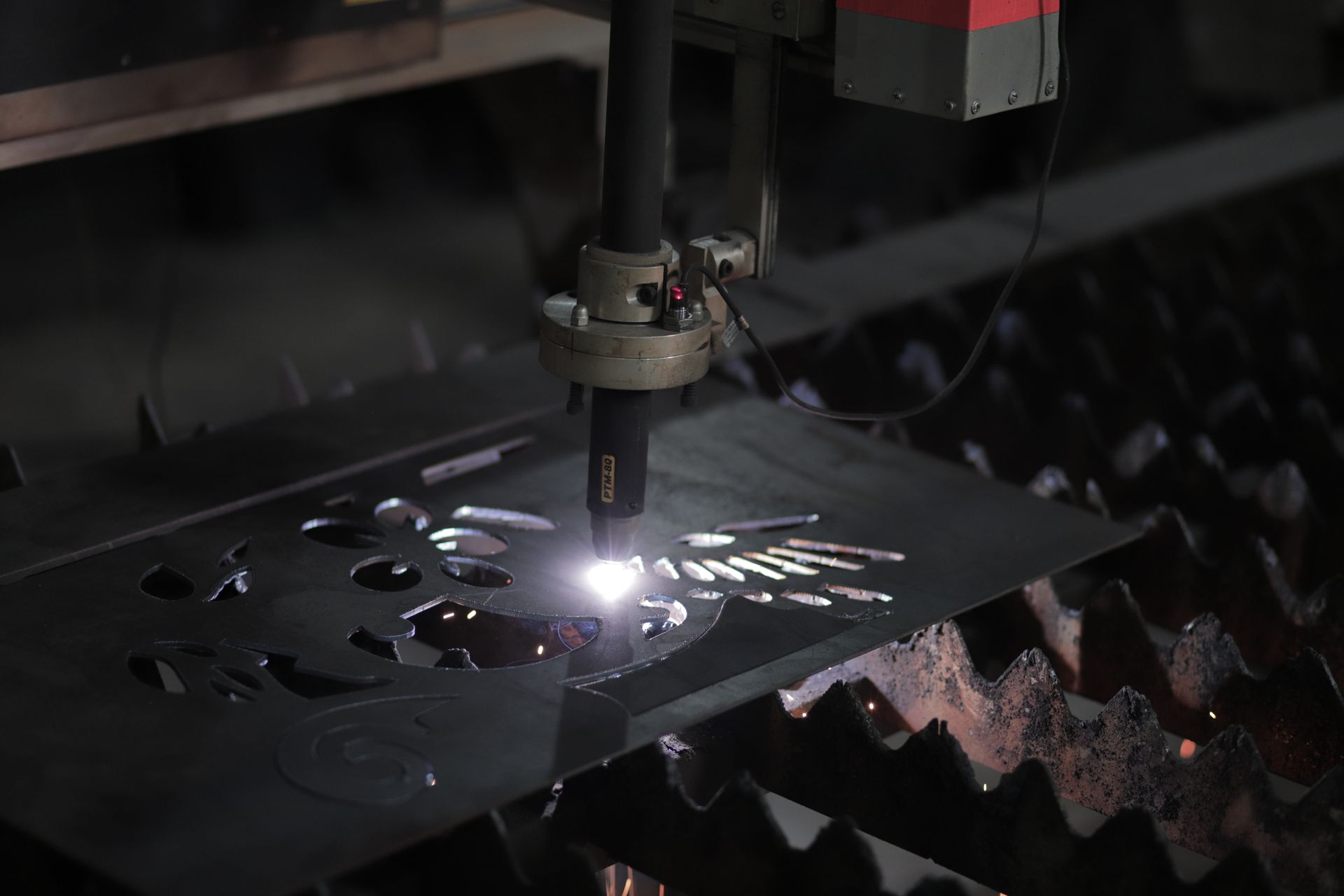
Take sheet metal fabrication, for example. Modern laser cutting equipment can process programmed parts with far less manual intervention than older cutting methods. In bending, automated bending can combine a CNC press brake with robotic component handling to run repeat production with less direct operator involvement.
The machinery still has to be programmed and set correctly. The correct tooling needs to be selected. Material behaviour has to be understood, components need to be checked and somebody has to deal with faults or variations when they occur.
Automation therefore tends to change the skills requirement rather than eliminate it.
Manufacturers are having to develop existing employees
Recruitment alone is unlikely to close that gap.
Industrial packaging manufacturer WERIT UK used National Manufacturing Day to highlight two employees who have recently completed engineering apprenticeships. One moved from production into engineering after joining the company around five years ago, while another completed a maintenance technician apprenticeship after 18 years with the business.
Those are useful examples because skills development is often associated with school leavers and young apprentices.
In reality, manufacturers already employ large numbers of people who understand their products, production processes and customers. Giving those employees additional technical skills can sometimes be a more practical route than trying to recruit someone who already has every required skill.
Make UK’s 2026 Executive Survey found manufacturers prioritising retraining and upskilling in areas including higher-level technical skills, digital skills and data analytics. It also found businesses preparing existing employees for redeployment as automation and digitalisation alter their operations.
New technology needs different combinations of skills
The challenge becomes more complicated as once-separate technologies begin to overlap.
Mechanical engineering, electrical engineering and software are increasingly found within the same production system. Maintenance engineers may need to understand mechanical components, sensors, electrical systems and machine controls. Production employees may work with CNC programming and digital job information alongside conventional drawings and measuring equipment.
Artificial intelligence adds another layer.
Research published by Make UK in June found that AI adoption in manufacturing remains relatively limited. Only 2% of manufacturers surveyed said it was widely embedded across their operations, and operational use was much lower than its use in administrative functions.
More than half identified skills shortages as the main barrier to greater AI adoption.
It suggests buying technology alone will not necessarily produce the expected productivity improvement. Businesses also need people who can use it effectively.
Productivity and skills have to develop together
Siemens illustrates what sustained investment in both can achieve.
Its Congleton factory in Cheshire recently produced its 10 millionth Sinamics variable speed drive. Daily production at the site has risen from around 650 products in 2006 to almost 2,400 today.
The company attributes the increase to investment in automation, digitalisation and industrial AI alongside workforce development. The factory currently employs around 500 people.
The timeframe is significant. This has not been a single automation project producing an overnight transformation. It reflects changes made across two decades.
For smaller manufacturers, the scale will obviously be different, but the underlying principle is relevant. New machinery can remove bottlenecks and increase output, but the benefit depends on how well it is integrated into the production process and how effectively employees can operate it.
Attracting the next generation still matters
Upskilling existing employees can only provide part of the answer.
Manufacturing also needs a continuing supply of younger people entering engineering and production roles, which explains the importance of initiatives such as National Manufacturing Day.
Factories opening their doors gives students the chance to see automation, robotics, CNC machinery, design, and digital production first-hand, rather than relying on an outdated idea of what factory work involves.
There is also a much wider range of routes into the sector than many people realise. Modern manufacturers employ people across production, maintenance, engineering, design, software, research, quality, logistics and numerous other disciplines.
Make UK says manufacturing supports around 2.6 million jobs in Britain and contributes approximately £220 billion to the economy. Manufacturing pay is also around 8% higher than the average across the economy.
That makes the industry’s ability to attract and develop skilled people an economic issue as well as a problem for individual employers.
The skills shortage will not be solved by automation alone
With manufacturers facing high employment costs and persistent difficulties filling technical roles, further automation is inevitable in parts of the industry.
But it would be a mistake to view technology and people as competing answers to the same problem.
More automated factories still require engineers, programmers, maintenance technicians and production specialists. In some cases, they require a broader range of technical knowledge than the processes they replace.
The more realistic answer to the skills shortage is therefore likely to involve both.
Manufacturers can use technology to reduce repetitive work and make better use of the people they already employ. At the same time, apprenticeships, retraining and technical education will have to keep pace with the machinery and digital systems appearing on factory floors.
National Manufacturing Day may help bring more people through the door. The longer-term challenge is ensuring the skills available inside those factories keep pace with the technology around them.