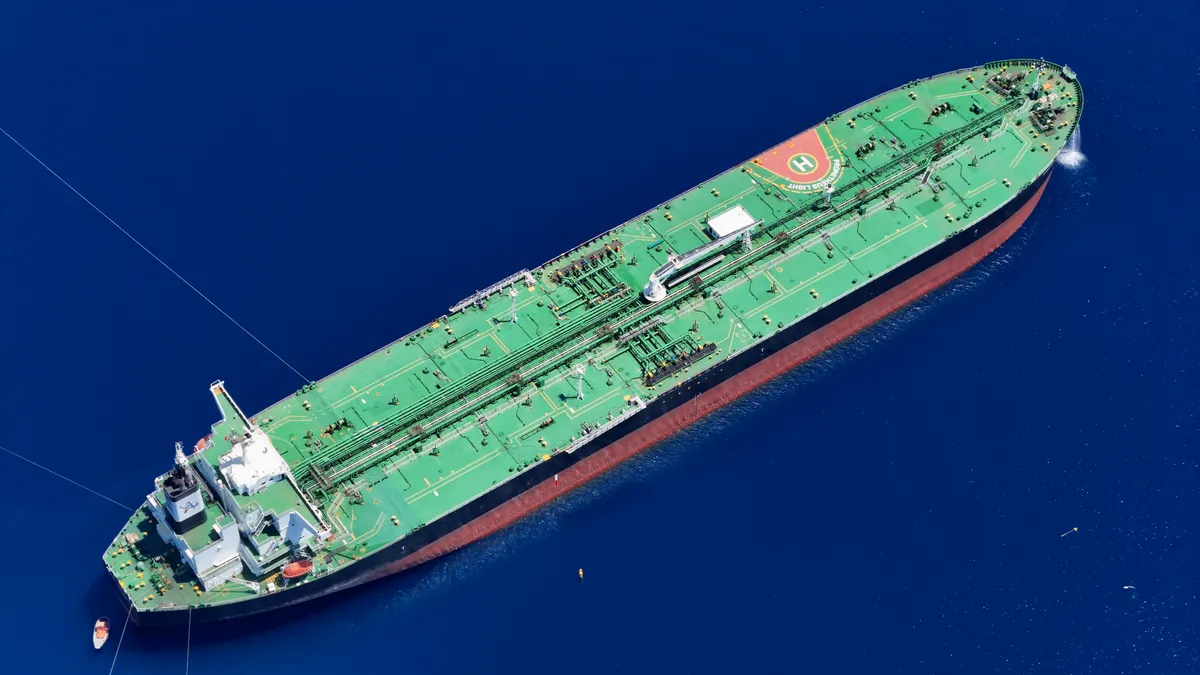
The Brent crude $120 risk became a live conversation in energy markets on Wednesday, as oil prices surged close to $100 a barrel following the destruction of five Iranian tankers by US forces and a fresh exchange of military strikes with Iran in the Gulf of Oman. Brent crude, the international benchmark, rose 1.55% to $99.44 a barrel, while US benchmark West Texas Intermediate (WTI) futures for October delivery climbed 1.75% to $94.66 a barrel.
The moves came a day after US Central Command (CENTCOM) confirmed it had destroyed five crude oil carriers belonging to Iran’s Islamic Revolutionary Guard Corps (IRGC). According to a CENTCOM statement, the vessels destroyed were the M/T Kaviz, M/T Charminar, M/T Horizon 1, and M/T Riesco in the Gulf of Oman, as well as the M/T Derya near Kharg Island. No American personnel were harmed in the operation.
A cycle of strikes that keeps escalating
The tanker strikes were a direct response to IRGC aggression. CENTCOM stated that the IRGC had targeted a US Navy warship with ballistic missiles twice in two days on 8 September. The warship successfully evaded both attacks.
This was not the first round of such exchanges. A separate earlier CENTCOM release detailed that US forces had struck three Iranian crude oil carriers on 5 September, after the IRGC launched ballistic missiles at two US Navy warships patrolling regional waters. The pattern is consistent: Iran targets American vessels, and Washington responds by going after the IRGC’s commercial shipping.
CENTCOM added that Iran has used these tankers as part of what it described as a multibillion-dollar shadow network that funds the IRGC and its regional proxies. Destroying the vessels, then, is not simply a military tit-for-tat, it is also an attack on the financial infrastructure sustaining the IRGC’s operations across the region.
The conflict is now in its seventh month, with Washington having tried a period of economic pressure on Tehran rather than direct military action, before strikes resumed towards the end of last month.
Brent crude $120 risk is ‘definitely plausible’, Goldman Sachs says
The question hanging over energy markets is how far prices could go if the standoff continues. Daan Struyven, co-head of global commodities research at Goldman Sachs, told CNBC’s Squawk Box Asia that oil reaching $120 a barrel was ‘definitely plausible’. Asked directly whether that level was within reach, Struyven did not hedge: ‘It’s definitely plausible.’
Goldman’s base case is more measured. The bank expects Persian Gulf exports to gradually recover as producers adapt to the disruptions, finding alternative shipping routes and, eventually, additional pipeline capacity. Under that scenario, the current price spike would not sustain itself.
But Struyven was clear that recent events have shifted the odds. ‘The developments over the last few days do suggest that that alternative upside price scenario, where exports actually stagnate over the coming few months, and where Brent exceeds $120 is the probability of that scenario is definitely going up as we’re seeing an intensification and broadening of the shipping attacks,’ he said.
In plain terms: if tanker attacks keep multiplying and Persian Gulf oil cannot find its way to market through alternative routes, the case for $120 oil becomes harder to dismiss. Every ship sunk or seized reduces the available capacity for Gulf producers to route their exports around the conflict zone.
The concern is not just the volume of oil at risk. The IRGC’s tanker network, described by CENTCOM as a multibillion-dollar operation, forms a parallel supply chain that has allowed Iran to move crude despite existing sanctions. Dismantling it vessel by vessel removes that buffer and, in the short term, adds further uncertainty to an already tight market.
For now, both benchmarks remain below the $100 level that would itself mark a psychological shift for consumers and policymakers. How long that holds depends largely on whether the two sides can find a pause, as they did for roughly a month before strikes resumed, or whether the exchange of fire in the Gulf keeps widening.