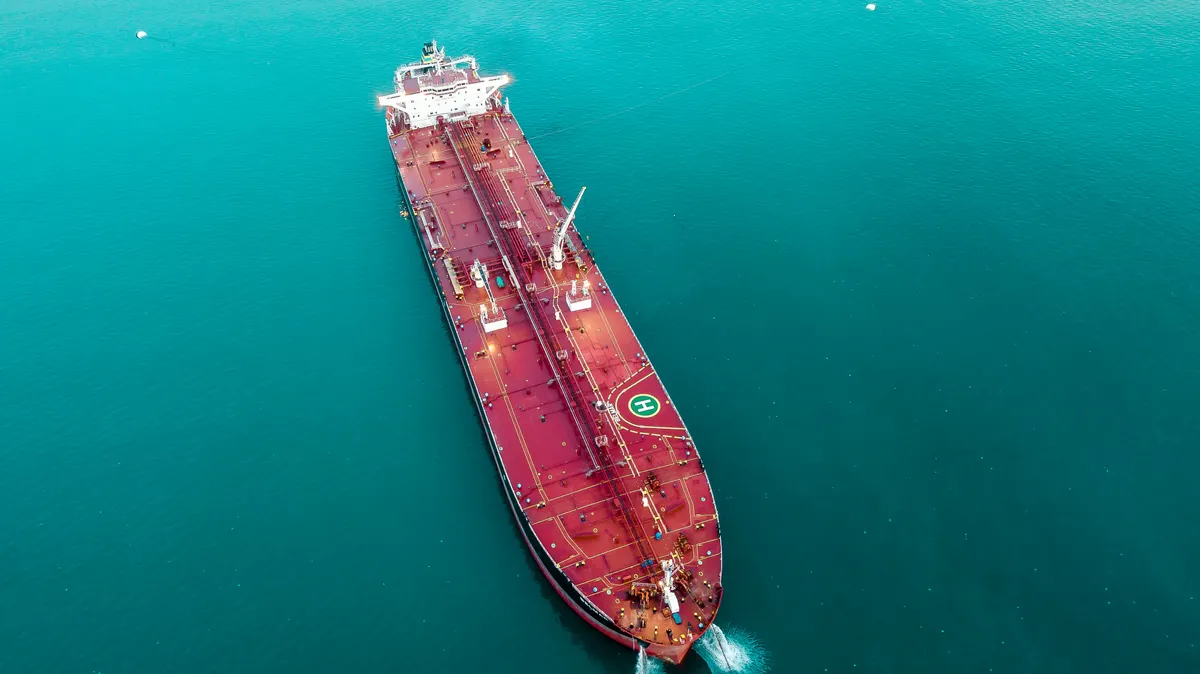
Oil prices dropped on Friday after the US-Iran Strait of Hormuz deal raised hopes that the Middle East conflict could be drawing to a close, even as Tehran publicly contested Washington’s account of what had actually been agreed.
US crude oil futures for July delivery fell 1.61% to $61.30 per barrel, while August futures for the international benchmark Brent crude lost 1.75% to $88.8 per barrel. The moves came after US President Donald Trump told reporters at the Oval Office that he expects an agreement to be signed ‘over the next few days’ and that the Strait of Hormuz, a narrow waterway through which a large share of the world’s oil passes, would reopen once a deal is finalised.
What the US-Iran Strait of Hormuz deal actually covers
According to CBS News, a memorandum of understanding was signed on Wednesday calling for the immediate reopening of the Strait of Hormuz. However, the harder questions (Tehran’s nuclear programme and the lifting of Western sanctions) have been left for a subsequent 60-day phase of talks. In other words, the framework is a staging post, not a settlement.
CBS News also reports that, for the first time in 110 days, ships owned by major companies are transiting the strait after effectively being marooned there since February. That development alone is enough to ease some of the supply anxiety that had been keeping oil markets on edge for months.
Early reporting cited by the Council on Foreign Relations suggests Tehran stands to gain considerably from the arrangement as currently outlined: a sanctions waiver on oil sales, the right to continue enriching uranium, and no requirement to dismantle its network of proxy forces in the region. Those are significant concessions, and they are likely to attract scrutiny from US allies and lawmakers in the weeks ahead. Iranian officials, for their part, have already signalled they intend to impose a transit fee on shipping through the strait once the 60-day MoU period expires, according to the Council on Foreign Relations.
Tehran pushes back on Trump’s claims
Trump also said earlier on Friday that he had called off a planned round of US military strikes against Iran, arguing that negotiations with Tehran ‘have been brought to the highest level of Iranian leadership and approved.’ Tehran’s response was swift and pointed. Iranian state-affiliated outlet Fars, reporting on Telegram, said Tehran had not approved any draft text for an initial memorandum of understanding with Washington.
In a follow-up post, Fars described Trump’s announcement as a retreat from his earlier military threats rather than a diplomatic advance, saying he had failed to present any new elements beyond a proposal Iran had already put forward. ‘The reality is that up until now, not only has Iran not given a final response, but it is the US that has returned to its previous demand,’ Fars reported in a translated post. It added: ‘Of course, it seems that given that the US has accepted the text proposed by Iran, there is a possibility of re-examining this text.’
The exchange reflects the gap that still exists between how Washington and Tehran are characterising the same set of conversations, a gap that the 60-day follow-on talks will have to bridge if any lasting agreement is to emerge.
Why oil prices have stayed relatively calm
Despite weeks of direct exchanges of strikes between the US and Iran and the prolonged closure of the Strait of Hormuz, oil prices have remained more contained than many analysts expected. BMO Capital Markets said ongoing diplomatic efforts, alternative shipping routes around the strait and sharply lower Chinese crude imports have all helped offset the geopolitical risks.
Citi echoed that view in a note published on Friday. The bank noted that lower Chinese crude imports have helped moderate prices since the start of the Middle East conflict, reducing fears of a bidding war for supplies. CNBC reported that Citi estimates China can keep imports near 8.7 million barrels per day without materially depleting its inventories, suggesting Chinese demand may not provide a major upward push to prices in the near term.
Whether the 60-day negotiating window is enough to resolve the deeper disputes over Iran’s nuclear programme and sanctions relief is the question that will determine whether Friday’s price fall proves to be the beginning of a sustained retreat or merely a temporary dip.