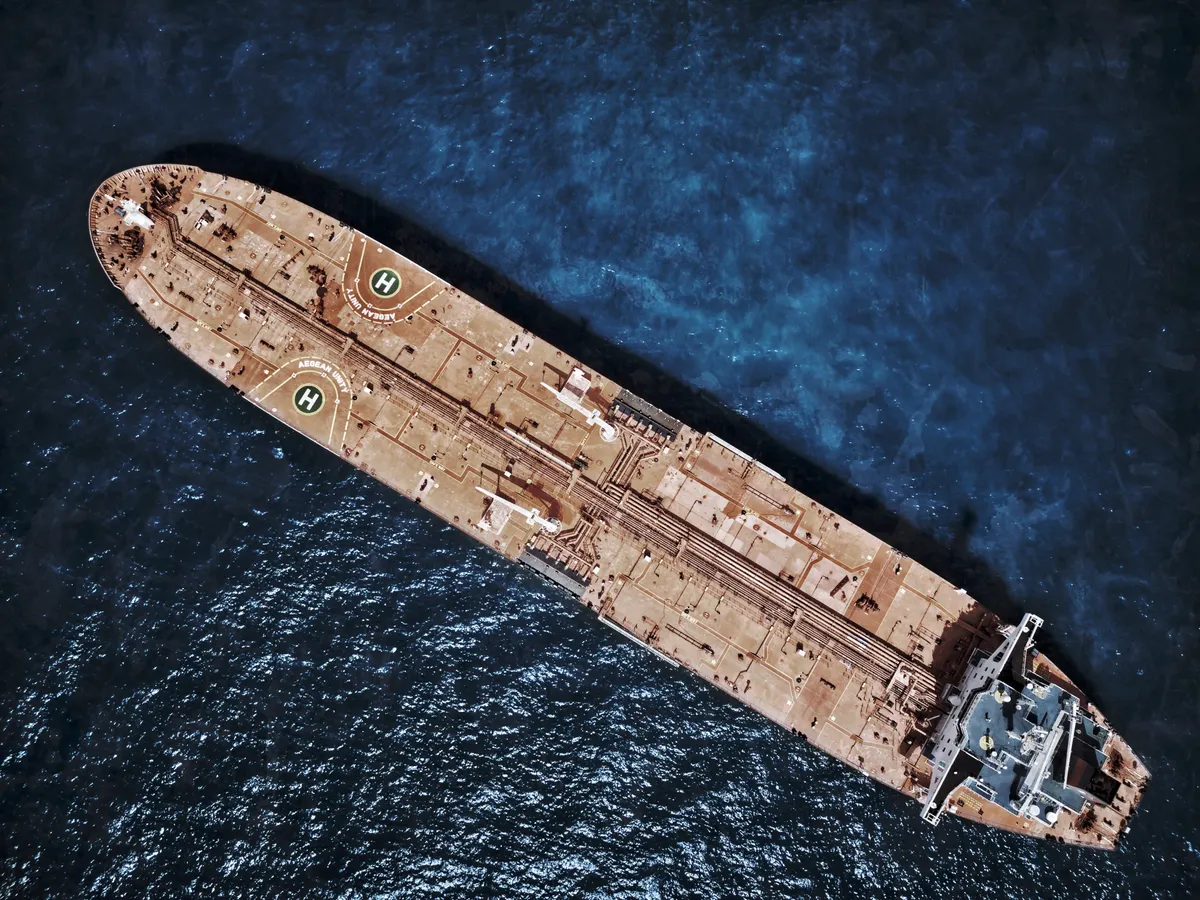
The Strait of Hormuz oil disruption is keeping crude markets tense, with oil prices edging higher as a spreading tanker spill off Oman’s coastline adds a new pressure point to an energy market already strained by months of conflict and blocked shipping lanes.
Brent crude futures for October delivery rose 0.1% to $88.90 a barrel, while US West Texas Intermediate futures for September gained 0.24% to $83.08 a barrel. Both benchmarks have been buffeted since early this year by a series of events that have reshaped how oil moves around the world.
The spill off Oman’s coast
A tanker that ran aground on 30 June is now causing serious environmental concern along Oman’s shoreline. The vessel was carrying an estimated 800,000 barrels of Russian oil and is under international sanctions, according to Reuters. Its cargo has begun leaking near a nature reserve that is home to Arabian Sea humpback whales and Socotra cormorants, Reuters reported.
The spill is spreading, adding an ecological dimension to what is already a fraught moment for shipping in the region. Deadly attacks on vessels in the Gulf of Oman and the Red Sea have pushed concerns over supply disruptions further, keeping traders on edge about what comes next.
The Strait of Hormuz oil disruption and its roots
The broader crisis traces back to 28 February 2026, when joint US-Israeli strikes on Iran triggered the closure of the Strait of Hormuz, according to the Council on Foreign Relations. The strait is one of the world’s most important energy chokepoints: roughly a fifth of global oil supply passes through it. Its closure sent immediate shockwaves through commodity markets.
The scale of the disruption that followed was severe. Tanker traffic through the strait fell by 70 per cent, and Brent crude surged to peak above $138 a barrel in the weeks after the closure, the Council on Foreign Relations reported. Prices have since come off those peaks, but the market remains tight.
The damage has not been limited to oil alone. Qatar’s Ras Laffan complex, one of the world’s largest liquefied natural gas facilities, was hit by a missile strike. The Council on Foreign Relations reported that the strike left around 17 per cent of global LNG capacity potentially offline for three to four years, an outlook that has compounded pressure on energy supplies far beyond the immediate region.
The International Energy Agency said on Wednesday that global oil demand is set to fall further than previously expected this year, amid the deepening impact from the closure. Supply remained 6.3 million barrels a day lower year-on-year in July, the IEA said. ‘Renewed hostilities and maritime disruptions’ are undermining efforts to boost global oil supply, the agency added.
Rerouting adds time and cost
Shipping companies unable to use the strait have been forced on to longer routes. Diverting around the Cape of Good Hope adds 10 to 14 days to a typical Asia-Europe transit and significantly increases fuel consumption and other operating costs per voyage, according to MarineLink. Those extra costs feed through into freight rates and, ultimately, the price of goods moved by sea.
While diplomatic efforts to reopen the strait are reportedly ongoing, no resolution has been announced. Christopher Tahir, a senior market strategist at Exness, said ‘the lack of clarity over the possibility of a full reopening of the waterway could leave oil prices exposed to the upside at a time when the market remains tight’, adding that any additional setbacks could push prices higher still.
The over five-month-old conflict continues to disrupt energy flows, and the combination of the Hormuz closure, the Oman spill and ongoing attacks on shipping means traders have little reason to price out the risk of further turbulence in the near term.