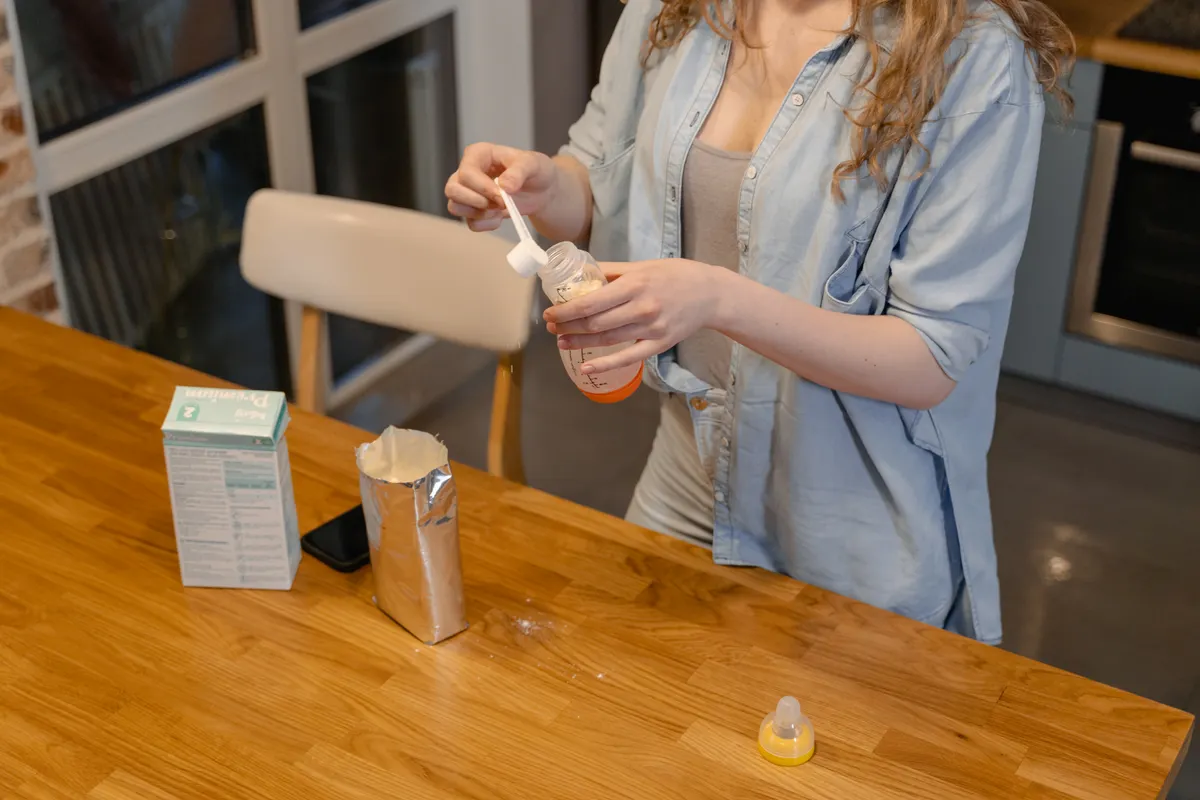
Parents are watering down baby formula to make tins last longer as rising costs push families to the brink, according to a County Durham baby bank that has helped hundreds of households since opening earlier this year.
Megan Sinden, founder of Moorside Baby Bank in Consett, said families had told her they were putting less powder in the bottle to stretch a tin for an extra week. ‘Which to me is quite dangerous,’ she said. She is calling for a cap on the price of formula, arguing: ‘It’s not a luxury item, it’s a basic need for a baby.’
Why Watering Down Baby Formula Is Dangerous
Infant formula is designed to deliver the exact balance of nutrients a baby needs when a mother cannot or chooses not to breastfeed. Adding extra water upsets that balance. NCT (National Childbirth Trust) warned that a lower concentration of formula reduces the nutrients a baby receives and also impairs the body’s ability to absorb what is there.
‘In turn, this can lead to poor weight gain, growth problems, and developmental delays,’ an NCT spokesperson said. In serious cases, too much water can cause more immediate harm, because a baby’s body cannot safely process the excess. NCT said infant formula should always be prepared according to the manufacturer’s instructions.
NCT’s own recent study found that nearly half of parents (48%) were struggling more financially after having a baby, underlining how widespread the pressure has become. The charity also reassured parents that buying the lowest-priced formula on the shelf still meets all of a baby’s nutritional needs.
Formula Prices Have Risen More Than 25%
The financial squeeze families are describing has a clear backdrop. A report by the Competition and Markets Authority (CMA) found that the average retail price of some infant formula had increased by more than 25% in recent years. For families already stretched by the general cost of living, that kind of rise can force impossible choices.
Sinden, a community worker from nearby Stanley, said Moorside Baby Bank struggled to receive formula donations precisely because the product had become so expensive. Donors, understandably, held onto it. Instead, the bank relied on grants to purchase formula directly. The bank, which opened in February 2025, has so far helped 226 families with goods including clothes, nappies and baby wipes, most of which were donated by the local community.
The pressures Sinden described go beyond formula. She said some parents had resorted to making their own baby wipes from kitchen towels. She had also spoken to a mother who felt breastfeeding was her only option despite experiencing latching difficulties, simply because she could not afford formula. ‘I’ve heard of people feeling the need to steal baby milk,’ Sinden said. ‘Obviously I don’t condone stealing, but I really sympathise with any parent that finds themselves in a situation like that.’
Families Speaking Out
One mother, 21 years old and expecting her second child, said the baby bank ‘really came in clutch’. She asked not to be named. ‘It’s a struggle affording everything for baby and me, sometimes we have to ask for help even when we don’t want to, but we will when it comes to our babies,’ she said. She added that the friendly environment at the bank meant families did not feel as though they were failing. ‘We don’t feel lost and helpless and like we’re failing when really we’re just trying our best.’
Sinden urged parents not to wait until things become desperate. ‘I really want parents to know that they can come to us before they reach crisis point and to not feel embarrassed or ashamed to have a little helping hand,’ she said.
NCT echoed that message, advising parents struggling with feeding costs to speak to their midwife, health visitor, GP or local family hub, or to reach out to organisations such as NCT directly. More detail on the BBC‘s reporting of this story, including the CMA’s full findings on formula pricing, is available online.