A Romania F-16 drone Black Sea incident unfolded on Thursday when two Romanian Air Force fighter jets were scrambled and destroyed a marine drone spotted close to the Neptun Deep natural gas development, with Romanian President Nicușor Dan accusing Russia of being the source of the device.
The episode is the latest in a run of incidents in which fighting connected to Russia’s war in Ukraine has edged toward Romanian territory, raising fresh concerns about the safety of energy infrastructure in the region.
Drone spotted metres from the Neptun Deep platform
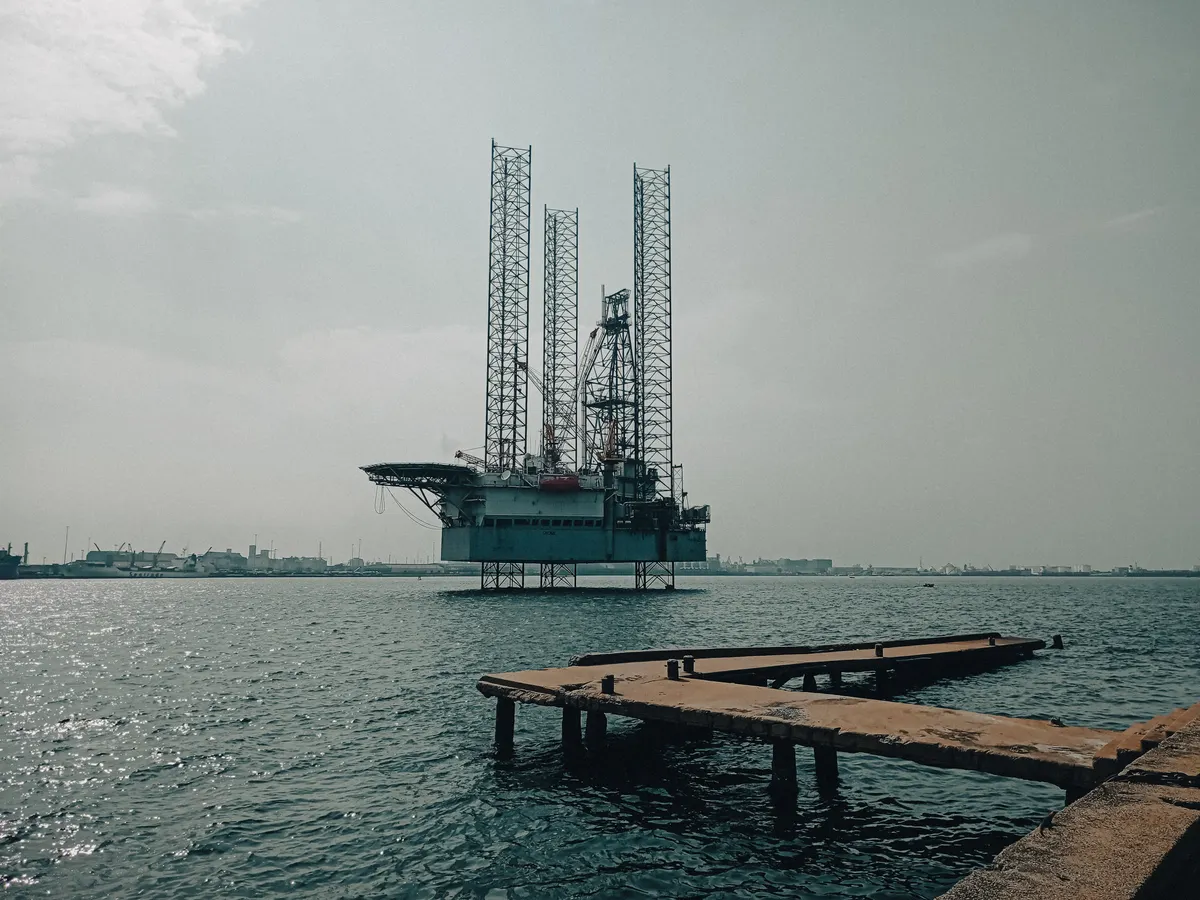
Romanian defence minister Radu-Dinel Miruță said the Romanian Coast Guard reported the drone’s presence a few hundred metres from Neptun Deep’s gas extraction operations on Thursday morning, around 80 miles east of the Romanian city of Constanța. The ministry then requested NATO authorisation to act.
‘Following an assessment and in coordination with the President of Romania, the decision was made to destroy the drone in order to protect the lives of the hundreds of personnel working on the platform and to safeguard critical infrastructure,’ Miruță said. ‘To ensure a rapid response, two Romanian F-16 fighter jets were scrambled with orders to engage. The drone was safely destroyed.’
Romanian investigations indicated that only a single drone was involved. Miruță confirmed that officials had established the drone was not of Ukrainian origin.
A NATO spokesperson told CNBC the alliance was ‘aware that two Romanian Air Force F-16 aircraft were scrambled in response to a maritime drone detected in Romania’s Exclusive Economic Zone in the Black Sea,’ adding that one aircraft ‘successfully engaged the drone, demonstrating continued readiness to respond to any potential threat.’
President Dan described the operation as ‘an action against time’ and said the drone had come from Russia. ‘I strongly condemn the intensification of these types of irresponsible incidents on the part of the Russian Federation,’ he wrote on X. ‘We remain vigilant alongside NATO allies to defend ourselves and repel such challenges.’
What is at stake at the Romania F-16 drone Black Sea flashpoint
The Neptun Deep project sits around 99 miles off Romania’s Black Sea coast and is expected to begin producing natural gas in 2027. Once operational, it would make Romania the largest natural gas producer in the European Union, carrying considerable weight for European energy security at a time when the continent has been working to reduce its dependence on Russian supplies since Moscow’s full-scale invasion of Ukraine in 2022.
The platform is a joint venture between OMV Petrom and ROMGAZ, each holding a 50% stake in the development. According to OMV, the project involves investment of around €4 billion and is designed to produce around 8 billion cubic metres of natural gas per year, underlining why any threat to the site draws an immediate military response.
The infrastructure required to bring that gas ashore is substantial. According to Romgaz, the pipeline connecting the Neptun Alpha production platform to the shore at Tuzla will run for 160 kilometres at a diameter of 30 inches. That link between offshore field and the onshore grid is precisely the kind of fixed, hard-to-protect asset that makes energy infrastructure vulnerable in an active conflict zone.
European energy prices rose sharply after Russia’s full-scale invasion of Ukraine in 2022, as Western governments imposed sanctions on Moscow and scrambled to find alternative sources of gas. Neptun Deep is one of the projects meant to reduce that vulnerability over the long term.
Thursday’s destruction of the drone was not an isolated incident. A series of Russian aircraft have breached Romanian airspace in recent weeks, with Romania’s Air Force shooting a drone down in late July. Dan said at the time that his country and its allies treated such incidents with ‘the utmost seriousness,’ describing the airspace incursion as ‘inadmissible and intolerable.’ In May, an apartment block in Galați, a city near Romania’s border with Ukraine, was struck by a Russian drone.
CNBC said it had reached out to the Russian government for comment. Romania shares a border with Ukraine, with Russia lying across the Black Sea, placing the country at the edge of a conflict that shows no sign of pulling back from its neighbours.
With Neptun Deep’s €4 billion investment and its pipeline to shore still under construction, the defence of the site is set to remain a live concern for Romanian and NATO planners as the platform moves toward its 2027 production target.