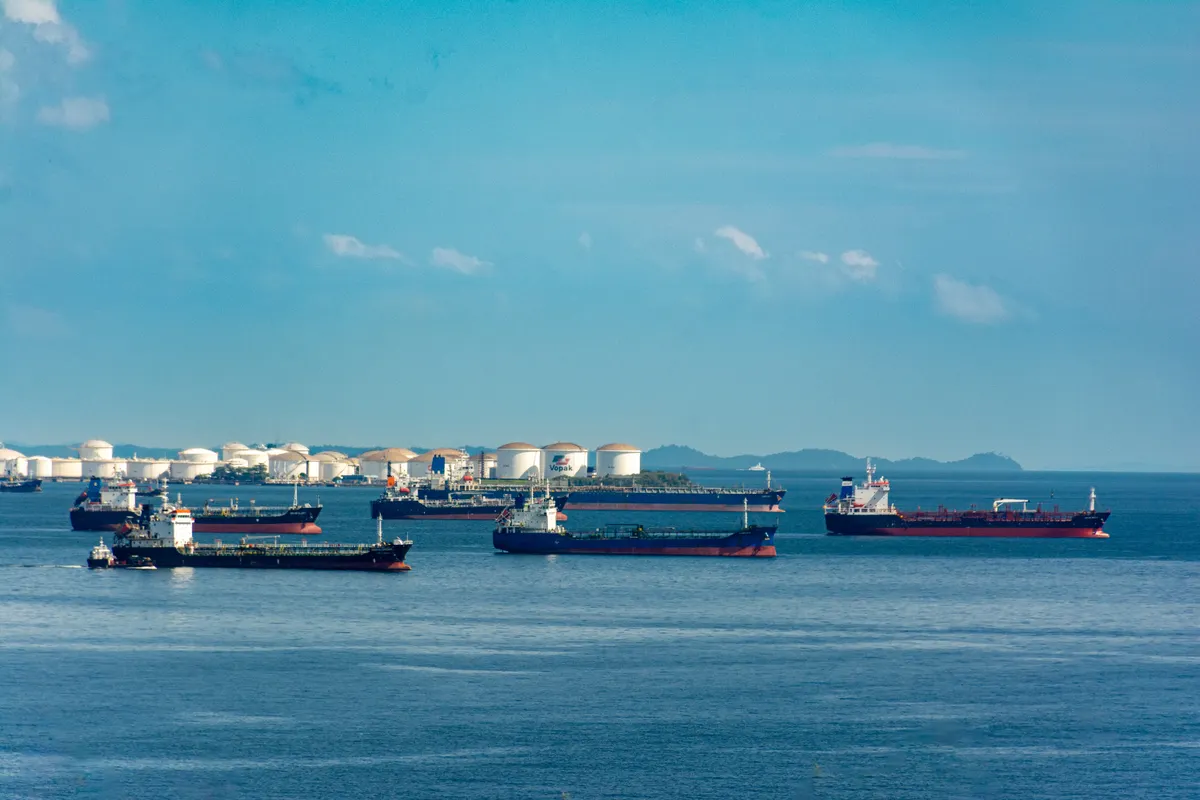
The US military has helped move more than 660 million barrels of crude oil through the Strait of Hormuz oil transit corridor since early May, escorting roughly 1,300 commercial vessels along a southern shipping route while Iran continues to contest control of the waterway.
U.S. Navy Captain Tim Hawkins, a Central Command spokesperson, confirmed the figures in a statement on Thursday. ‘Multiple routes remain free and open for commercial transit,’ Hawkins said. The numbers suggest that at least 160 million barrels have moved through the strait in the three weeks since Central Command reported 500 million barrels on 29 July, implying a rate of more than seven million barrels per day over that period.
How Much Oil Is Really Getting Through?
The precise daily volume remains disputed. U.S. officials told Axios that about 10 million barrels per day have exited the strait in recent weeks. Energy Secretary Chris Wright said on 11 August that the seven-day average had risen to nearly nine million barrels per day, and attributed any undercounting by private monitors to ships moving covertly through the waterway. ‘In coordination with the U.S. military, the U.S. Department of Energy maintains the best available data related to oil and oil products leaving the Arabian Gulf,’ Wright said in a social media post.
Private monitors put the figure considerably lower. The maritime intelligence firm Windward estimates that crude oil exports through Hormuz averaged about five million barrels per day in July, up from about four million barrels per day in June and 1.6 million barrels per day in May. The New York Times has also reported that tankers using US-protected routes carried around five million barrels daily out of the Persian Gulf in July, broadly consistent with Windward’s estimate.
To put those numbers in context, the Congressional Research Service found that approximately 25% of global oil supply, equivalent to around 20 million barrels per day of crude oil and petroleum products, moved through the Strait of Hormuz during 2025. Current volumes, even on the most optimistic U.S. government estimates, remain well below that pre-war level.
Michelle Wiese Bockmann, senior maritime intelligence analyst at Windward, said exports in August are expected to increase further. ‘My assessment is that it’s scaling and it’s scaling quickly despite the fact that Iran is placing enormous pressure on maritime security,’ she said. She added that Gulf states are ‘ready to do whatever they can’ to increase their oil exports, and that US military protection for those routes ‘is not a secret.’
A Contested Strait, High Stakes on Both Sides
The security picture in the Strait of Hormuz oil transit zone remains complicated. Iran said on Tuesday it has closed the strait until the US meets its obligations under the interim peace deal signed on 17 June. President Donald Trump has insisted the strait is open and under US control. The two positions reflect a physical reality on the water: the strait is 21 miles wide at its narrowest point, with the US holding more sway near Oman’s coast and Iran maintaining greater influence near its own shoreline.
Jakob Larsen, chief safety and security officer at BIMCO, described the situation plainly. ‘It’s a contested security situation in the Strait of Hormuz,’ he said. ‘But both sides are still able to project power on either side of the strait. It’s not really possible for either side to completely defend their own interests in the territorial waters of Oman and the territorial waters of Iran.’
The risks to crews and vessels are real. The International Maritime Organization, a United Nations agency, recorded at least 17 commercial ships attacked in and around the strait during July and August. At least four sailors were killed and more than a dozen injured in those incidents.
Yet commercial incentives remain powerful. Bockmann said tankers making the passage can earn $500,000 a day, with seafarers receiving double or triple their normal pay for each transit. Bridget Diakun, maritime intelligence and research director at Lloyd’s List, acknowledged at a Thursday briefing that tracking the true volume of oil moving through the waterway is difficult: ships often transit at night while satellite imagery is typically captured in the morning. ‘There’s a lot of unknowns,’ she said. As Bockmann put it: ‘It’s a very intense, serious operation to get the oil out, high risk, high profit.’