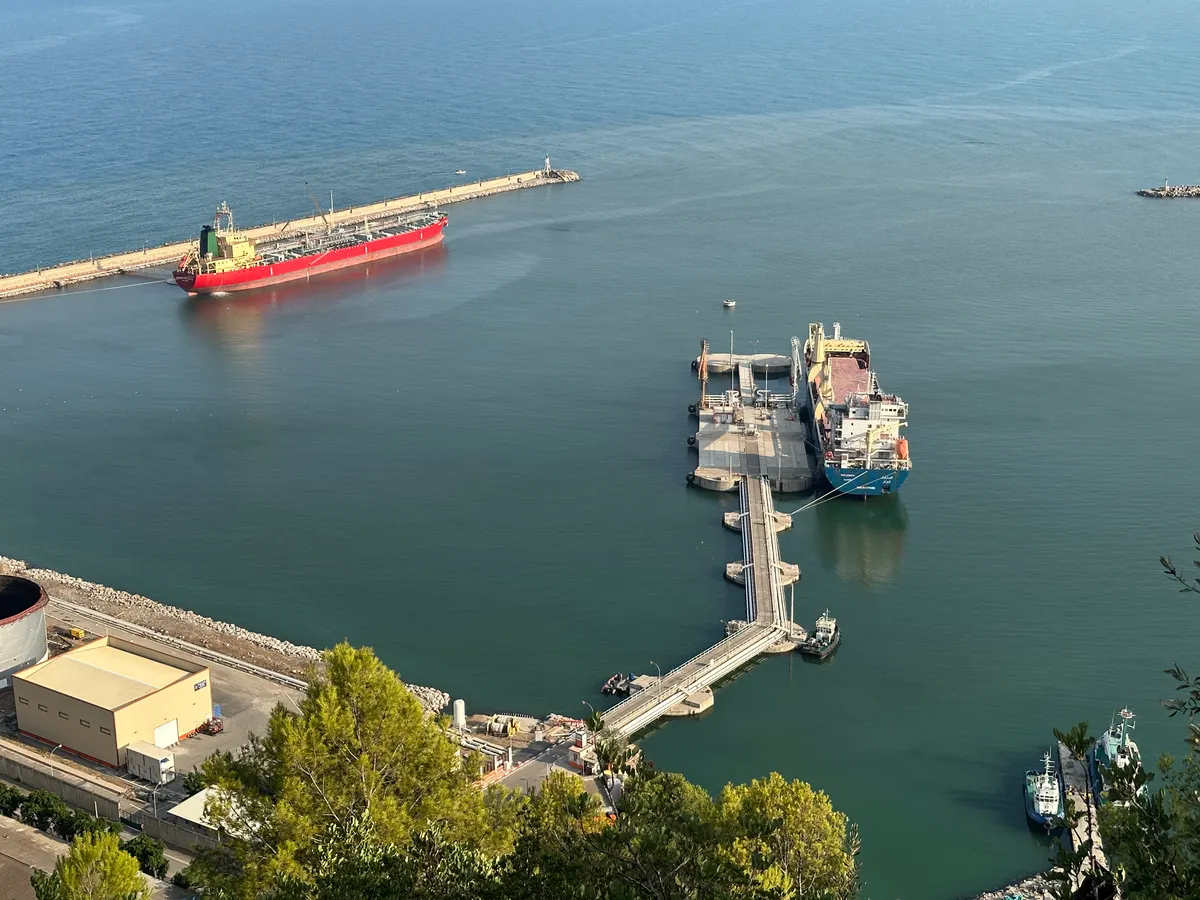
President Donald Trump’s threat to seize Iran’s Kharg Island and take control of its oil and gas markets pushed crude prices higher on Thursday, with the Trump Kharg Island oil threat landing against a backdrop of intensifying military exchanges between Washington and Tehran.
US crude oil futures rose 0.72% to $90.68 per barrel by 8:32am ET. Brent futures, the international benchmark, were up 0.48% to $93.56. Prices had swung sharply during the morning session, jumping when the latest US strikes against Iran were launched before briefly turning negative after US Central Command announced those strikes had been completed, briefly raising hopes that the situation might stabilise.
What Trump Said About Kharg Island
Trump posted on Truth Social that the US would seize ‘total control’ of Iran’s oil and gas markets, comparing the approach to Washington’s actions in Venezuela. He said the US would take Iran’s Kharg Island, which is located about 33 kilometres (21 miles) from the Iranian mainland, ‘at some point in the not too distant future,’ according to PBS News. Kharg Island serves as Iran’s main oil export terminal, making it central to the country’s energy revenues.
The threat did not come from nowhere. According to the BBC, US forces had already struck Kharg Island on 13 March, with Trump claiming at the time that his forces had ‘totally obliterated’ every military target there. Thursday’s remarks represent a significant escalation beyond those earlier strikes, moving from targeting military infrastructure to threatening outright seizure of the island’s oil facilities.
Trump also said the US would hit Iran ‘very hard’ on Thursday night, following a round of airstrikes carried out on Wednesday against Iranian surveillance capabilities, communication systems and air defence sites. He accused Iran of shooting down an Apache helicopter in the Strait of Hormuz earlier this week, a claim that formed part of his stated justification for the continuing military pressure.
Iran Hits Back as the Conflict Widens
Iran’s state-run Tasnim news agency said Tehran had struck several US military facilities in Kuwait and Bahrain, naming Ali Salem and Ahmad al-Jaber air bases in Kuwait and Sheikh Issa air base in Bahrain among the targets. Bahraini authorities said their air defence systems had intercepted and destroyed Iranian aerial threats. Iranian state media separately reported missile and drone attacks against US vessels operating in the Strait of Hormuz.
Kuwait shut its airspace and intercepted projectiles on Thursday. Israel, meanwhile, warned of launches from Lebanon toward communities in the country’s north, adding a further dimension to the spreading regional tension.
The maritime situation has been deteriorating for weeks. The Hill reported that the M/T Jalveer became the 13th commercial ship disabled by US forces since a blockade was enacted on 13 April, and the third such vessel to be disabled in the current week alone. That pattern of interdictions underlines how extensively US military operations have been affecting commercial shipping in the region over recent months.
On the financial front, US Treasury Secretary Scott Bessent added a further pressure point. Al Jazeera reported that Bessent vowed any damage Iran ‘inflicts on our allies in the Gulf will be paid for with funds extracted’ from Iran’s frozen assets, which are estimated to total about $100 billion globally. That threat ties economic consequences directly to military actions and signals that Washington intends to use frozen Iranian funds as leverage regardless of how the conflict develops on the ground.
Despite the sharp escalation, the energy consultancy Rystad Energy said Thursday that the oil market was better-positioned to absorb disruptions than in past crises, citing record US crude exports, softer Chinese demand and alternative export routes that reduce dependence on the Strait of Hormuz. Rystad’s senior vice president Jorge Leon, however, warned that the chances of a near-term diplomatic breakthrough have diminished, leaving oil prices vulnerable to sharp swings as investors assess whether the latest hostilities will remain contained or develop into a more prolonged conflict.
Trump’s frustration with Tehran centres on two key sticking points: Iran’s refusal to agree to a deal to open the Strait of Hormuz and its unwillingness to abandon its nuclear programme. With both sides trading strikes and Washington now openly threatening to seize Iran’s primary oil export infrastructure, the path to any negotiated outcome appears considerably narrower than it did even days ago.