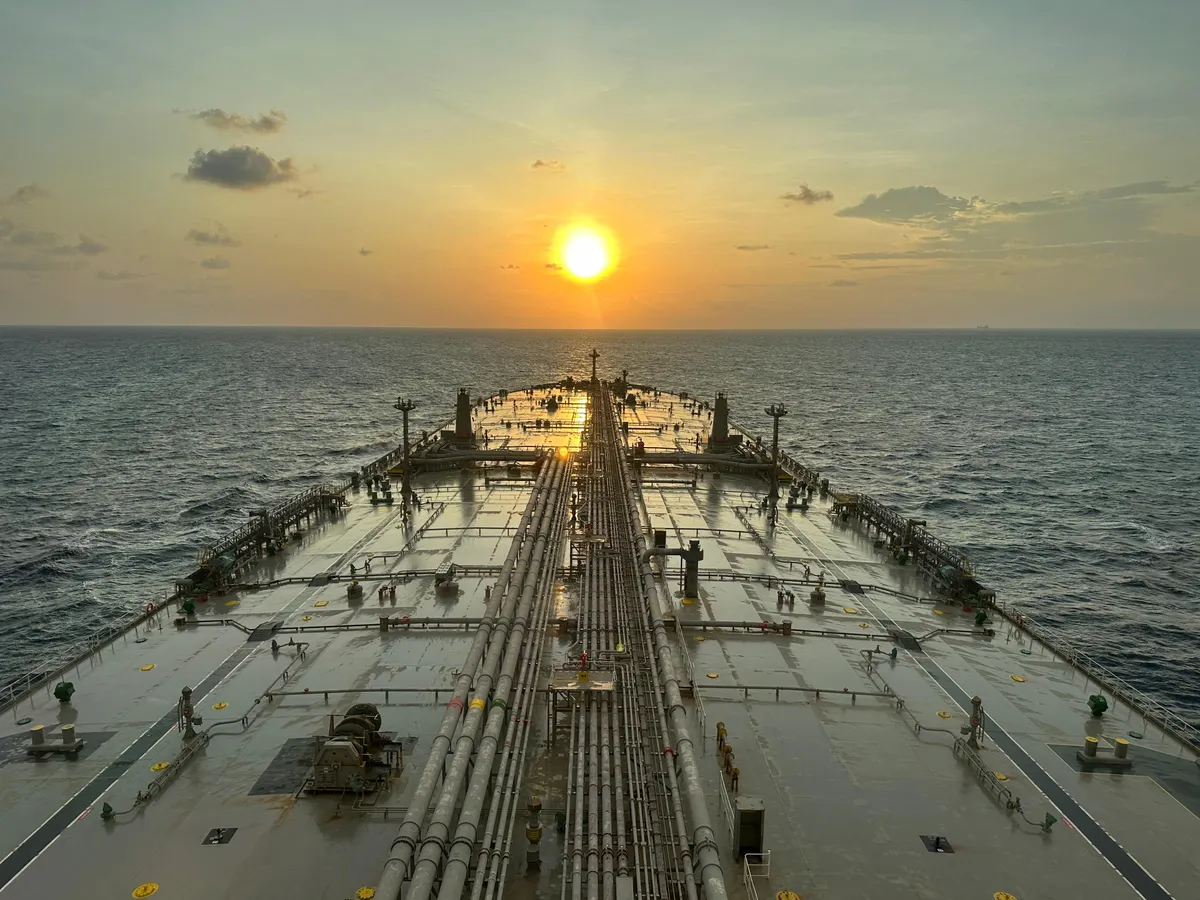
Oil prices fell sharply on Wednesday as a proposed Strait of Hormuz shipping deal took shape between Iran and Oman, and the United States moved away from military options in favour of economic pressure on Tehran, easing fears of a disruption to Gulf energy supplies.
International benchmark Brent crude futures for October delivery declined 2.62% to $86.26 a barrel, while US West Texas Intermediate futures for October dropped 2.56% to $80.25 per barrel. The moves reflected a broad easing of the risk premium that had built up in oil markets over fears of conflict in the region.
Sanctions, not strikes: the US shifts its approach
Dan Coatsworth, head of markets at AJ Bell, said that ‘US sanctions on Iran were less severe than anticipated,’ adding that lower oil prices helped markets regain some poise as government bond yields pulled back from recent highs. The combination of a less aggressive sanctions package and reduced talk of military action gave investors room to breathe.
Paolo Broccardo, BankPro’s chief executive officer, said the shift away from military action had reduced the perceived risk to Gulf supply, even though the US had not ruled out other interventions. He also noted that Pakistan had reported meaningful progress in talks aimed at de-escalation and restoring navigation through the Strait of Hormuz, the narrow waterway through which a large share of the world’s seaborne oil passes.
The Strait of Hormuz shipping deal taking shape
At the heart of the market calm is a developing agreement over the Strait of Hormuz itself. Iran and Oman have been discussing a joint temporary shipping route through the strait, alongside what has been described as a ‘mind clearing mission’, intended as a precursor to a permanent arrangement for administering the waterway.
According to i24NEWS, the proposed arrangement would divide traffic along defined lanes: all vessels entering the Persian Gulf would transit through a shipping lane closer to Iran, while outbound traffic would use a route closer to Oman. The lane-by-lane structure suggests a practical, operationally specific agreement rather than a vague diplomatic statement, which goes some way to explaining the positive market reaction.
The expected announcement is also unusually broad in its sponsorship. i24NEWS reports that the deal is expected to be announced jointly by Iran, Oman, the International Maritime Organization and the United States. The involvement of the IMO, the UN body that oversees international shipping standards and safety, lends the arrangement a degree of institutional weight that a purely bilateral deal would lack.
Oman’s foreign minister gave a public signal of the direction of travel in a social media post. ‘Future management of the Strait and a permanent solution will follow in due course,’ the minister wrote. ‘Discussions with regional partners will be conducted in support of peace and cooperation, stability and freedom of navigation.’ The phrasing is careful, treating the temporary arrangement as a first step rather than a resolution, but the tone is one of managed progress rather than standoff.
Why the Strait matters to global oil markets
The Strait of Hormuz sits between Iran and Oman at the mouth of the Persian Gulf. It is one of the world’s most closely watched chokepoints for energy, and any threat to navigation there tends to push oil prices higher almost immediately. The recent spike in Brent and WTI prices had reflected exactly that kind of concern, with traders pricing in the possibility that conflict or Iranian action could disrupt tanker traffic.
Wednesday’s drop, with Brent shedding more than $2 a barrel, suggests the market is now treating a negotiated outcome as the more likely path. The joint announcement framework, bringing in the IMO alongside the regional powers and the US, is designed to give the temporary Strait of Hormuz shipping deal international legitimacy and make it harder for any single party to walk away without consequence.
The temporary arrangement is expected to be followed by talks on a permanent mechanism for administering the waterway, though no timeline for that longer process has been stated.