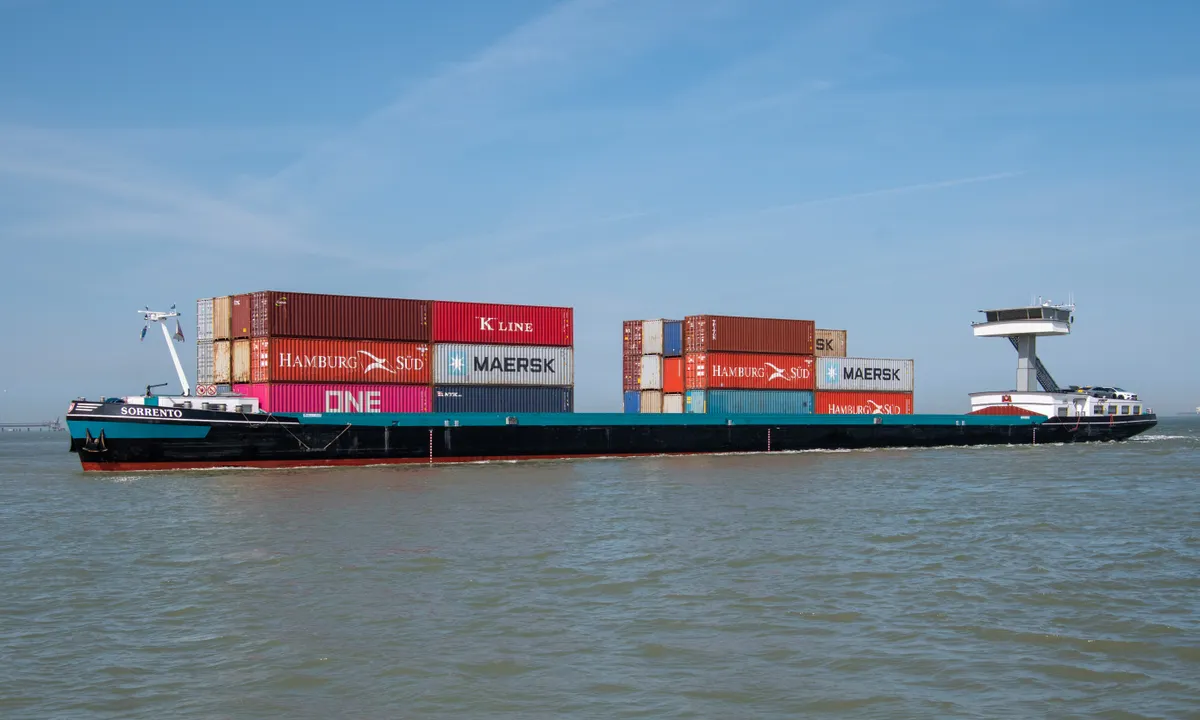
The Strait of Hormuz shipping halt reached near-total standstill over the weekend as the 60-day ceasefire between the United States and Iran expired on Monday, with diplomacy stalled and no long-term agreement in sight. Just five cargo ships passed through the critical passage on Saturday, according to data from Kpler cited by Reuters, while not a single vessel was recorded on Sunday. The previous weekend had seen 31 ships make the same journey.
The strait carries about a fifth of the world’s oil, averaging around 130 vessel transits per day under normal conditions. Overall shipping through the passage is down 90% since before the war started on 28 February, and last week traffic had already hit a three-month low, with a five-day average of 13 vessel transits on Tuesday reflecting the lowest level since 12 May, according to a CNBC analysis of Kpler data.
Strait of Hormuz shipping halt rattles oil markets
Oil prices dipped on Monday but moved less sharply than some traders anticipated. International benchmark Brent crude futures fell 0.15% to $88.45 per barrel, while US West Texas Intermediate crude declined 0.74% to $81.79. The relatively modest move on Monday stands in contrast to earlier in the crisis: according to Custom Map Poster, crude oil prices had already dropped 10% following the initial closure of the strait.
Parash Jain, described by CNBC as an HSBC shipping expert, told CNBC’s Squawk Box Europe on Monday morning that investors should understand ‘chaos is the norm’ for the industry and factor it into their base assumptions. HSBC‘s view underlines how the disruption, however severe week to week, has become the baseline expectation rather than an exception for shipping markets.
Diplomacy deadlocked as ceasefire deadline passes
Iran’s Foreign Minister Seyed Abbas Araghchi said on Saturday that the two sides do ‘not have anything like a ceasefire,’ according to quotes from Iranian news outlet Shahrara News. He was direct about the state of talks: ‘No negotiations have been held between the United States and us at this time… Qatar and Pakistan are exchanging messages between the parties and are in contact with us, but this does not mean negotiations.’
Iran’s Deputy Foreign Minister Kazem Gharibabadi pushed back on any suggestion of US territorial ambitions over the waterway. In a post on X on Friday, he insisted the strait will remain ‘Iranian’ and only be closed and opened ‘under Iran’s command.’ His comments came in direct response to a claim by US President Donald Trump, who said last week that ‘pretty soon I’ll be declaring the Hormuz Strait a territory of the United States.’
With the ceasefire now expired and no framework replacing it, prediction markets reflect deep trader pessimism about a quick resolution. According to Crypto Briefing, the odds of Strait of Hormuz traffic normalisation by 30 April sit at just 21.5% YES, with traders broadly sceptical that a deal can be reached in time. A separate market tracking whether a diplomatic meeting will take place in Islamabad by 30 April stands at only 10% YES, reflecting how little confidence exists in the scheduled talks producing a breakthrough.
The Islamabad talks had been presented as a possible channel for progress, with Qatar and Pakistan both acting as intermediaries between Washington and Tehran. Araghchi’s comments, however, make clear that Iran does not consider these exchanges to constitute genuine negotiations. Both sides appear far from the kind of direct dialogue that would be needed to reopen the strait and restore anything close to normal shipping volumes.
With prediction markets placing the chance of normalised traffic by 30 April at just over one in five, and the ceasefire now formally lapsed, the pressure on those diplomatic back-channels is only likely to intensify in the days ahead.